Showing posts with label Malcolm Gladwell. Show all posts

Saturday, February 16, 2013

Write A Book

This is part 1 of a bigger collection of posts of "How to publish an ebook."

First you have to write a book. If you have paid attention to Robert Heinlein's five commandments, you've been doing just that. I strongly suggest you NOT try to publish your deathless prose until after you've written a million words.

In addition to your deathless, prose you may want to think of ebook design.

I suggest you use your favorite word processor, but you only want to use a subset of its formatting capabilities. Microsoft Word is a big bloated beast of a program because it enables a ton of different functions you won't use. You won't use multiple columns in an ebook. Things like tables and drop-caps are troublesome--avoid them.
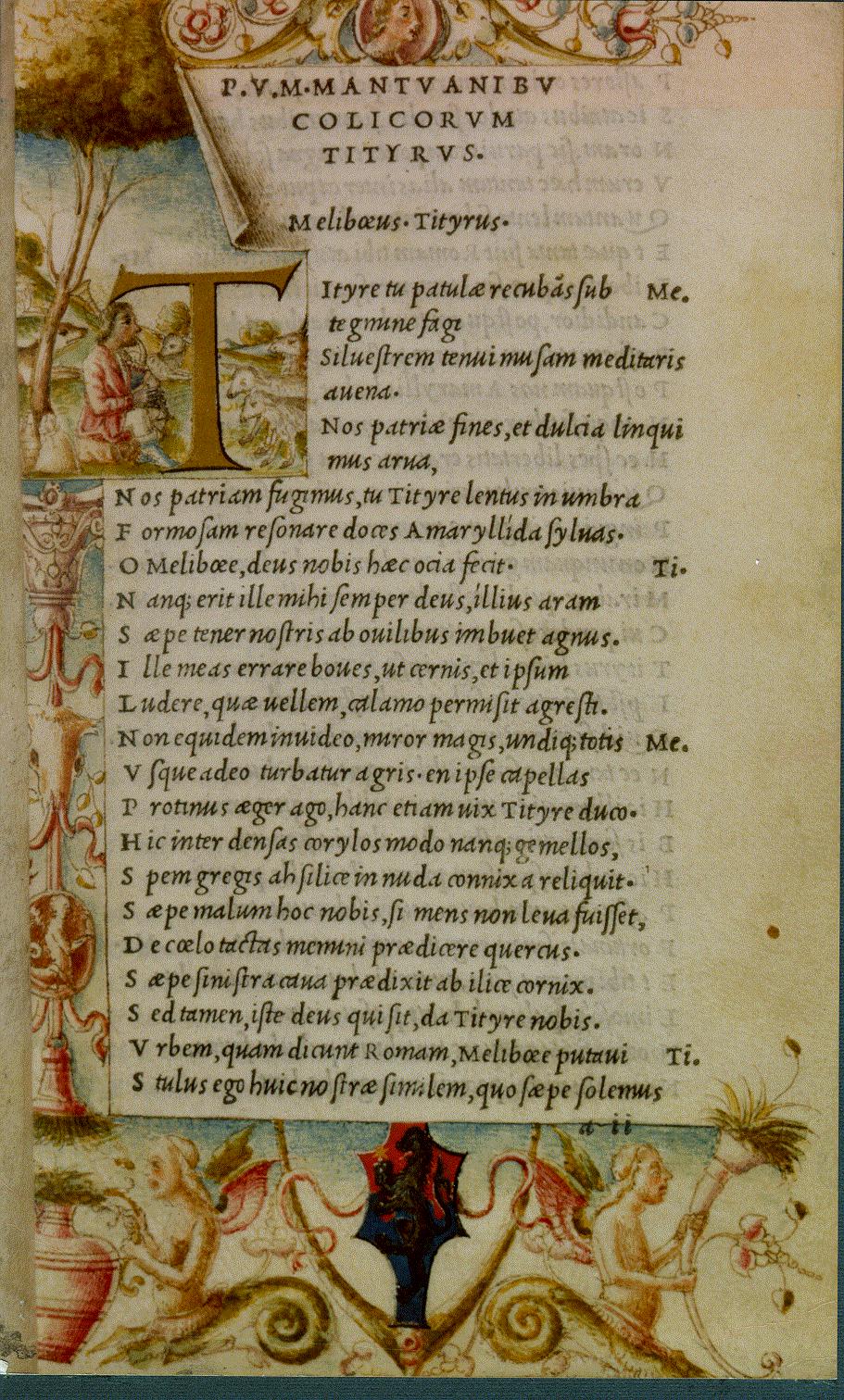
The rationale is that you're going to end up with either a MOBI or an ePub file which are both built on top of XHTML. If you don't see a cool typesetting feature in a lot of web pages, you probably can't put it in an ebook, either. In later steps you'll be converting your book into XHTML and if the converter program barfs, you have to back up and revise your book to avoid the typographic thang which caused the barfage.

Easier to start with a vanilla word processing file. I'm assuming you will be starting with a DOCX file generated by Microsoft Word.

I've never used Scrivener, but if someone reading this has any strong opinions about it I'm all ears. Just keep in mind that whatever you use has to have some mechanism for generating XHTML.

Typefaces are not fonts, but fonts are specific implementations of a particular typeface. If you're not into typography it behooves you to learn just enough to not-suck at book design.

Typefaces come in three flavors: serif, sans-serif, and display. Use sans-serif for forms and signage. Use serif for body text. Use display for headers and titles. This is because centuries ago the monks copying texts found that adding those tittles at the ends of letters made reading faster/easier than without them. Besides, when the Romans carved words in stone, they took pains to make them look nice. That's why many serif typefaces have Roman in their names. And when people used to read newspapers, they often chose the London Times or the New York Times. That's why many typefaces have Times in their name, too.

However, just a word or two works in sans-serif. Popular with Nazis, Communists and highway departments, sans-serif is the typeface of totalitarians. 

There are other times when you want your text to evoke a time or place. Ferinstance, a book about camping might have its title rendered with letters that look like bent pieces of logs. An Algerian face evokes thoughts of the Victorian era, and the Star Trek face evokes a Science Fiction vibe. These are all instances of Display typefaces. They vary to an incredible extent and you don't care about Display typefaces until you get to cover design.

You need to pick a typeface for your ebook that is supported by your e-reader hardware. If you are using Microsoft word, use Times New Roman for everything. That's not exactly what Kindle or the Nook uses, but it's so close you have to be a typeface designer to know.

Next you have to worry about which letters you use in your ebook. You want to use 'single quotes' or "double quotes" and not use ‘single quotes’ or “double quotes”. If you don't replace all these characters, you'll end up with unsightly blocks where these characters are used in your text. Same goes for several other special character.  Microsoft Word likes to make your documents look better and they do so by changing what you type into something that means the same but looks better.

The more of these characters you remove up front when you write your book, the less tweaking you have to do when you get to future steps.
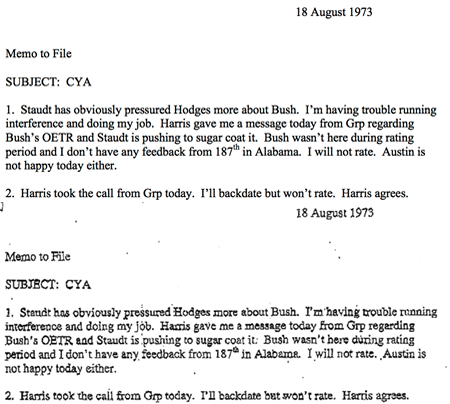
Yes you can fix things downstream, but consider the problem of typos. You want to fix typos in the Word file, and if you do a ton of manual tweaks downstream from the Word file, all those manual tweats will make you not-want to fix typos--or worse, fix those typos in both your Word file and also in the manually tweaked downstream files.

For this reason, it makes sense to tell Word to not-change what you type automagically.

(You can find the bullet-point outline of How To Publish An Ebook here.)

Friday, November 16, 2012

Your Writing Sucks

33    Everyone’s writing stinks until they write a million words.

One thing to remember about Writing Mantras is that I steal them whenever I can. This came from Ray Bradbury who had more writing talent in his left pinky than most writers I know (as well as that fellow I see when I'm shaving in the morning).

It is not unusual to create sucky prose. Everyone does it. Does your prose suck? Don't feel bad if it does. You've got a lot of company. CERTAINLY don't stop writing if your prose sucks.

Suppose you wrote a novel and submitted it to someone in New York. And they said, "Go away, this sucks." I'm told that Nora Roberts or someone of her caliber wrote a novel and then after that didn't sell, kept it circulating while she wrote a second novel, and she kept that circulating with the first while she wrote a third novel. She kept this up until she'd written 10 novels. And after she put 10 novels in the pipeline, one of them sold. If we assume each novel was 100,000 words that's a million words.

Malcolm Gladwell talks about how the Beatles played a LOT of music in Germany before they became famous. He figures that if you work at anything for 10,000 hours, you'll become world-class at it. Supposing you write 100 words an hour. And what fool can't write that much in an hour? You can write a million words.

If your writing sucks, you should work at improving it. And you should commit to improving it over the course of thousands of hours of practice. One of the downsides of the ease of self-publishing is that you can publish your worst prose because you think you're ready when you're not.

I thought my first novel was really hot stuff. Now I shudder to think someone might see it. Was it the best novel I could write? Yes. Can I write a better one today? Certainly.

I remember when I was a younger in college. There was this book on the New York Times bestseller list called Raise the Titanic by Clive Cussler. I loved that novel. So, a few months later I looked and saw another novel by Clive Cussler. And another. And a few more over the course of a year or so. I snapped them up and read them voraciously. But I noticed something about a couple of them. The quality wasn't there. One seemed quite amateurish, and the other less so. Yet all the rest of his novels were great.

I didn't surmise this until later, but I figured that the two below-par novels were written before Cussler got his first book deal. And they languished unsold in his desk drawer for who knows how long. When lightning struck and Cussler was a famous, bestselling author, he could pull out those manuscripts for a quick buck. He'd obviously written, and been rejected, and written some more, and some more. One one fine morning he'd hit the magic 10,000 hour mark, or the 1,000,000 word mark and walla. He was producing bestselling prose.

I'd like to know whether the Beatles or Clive Cussler recognized that moment when they'd performed 10,000 hours or written a million words. I suspect they did not.

I don't know if your writing sucks now. I know for sure that it sucked when you started. And I hope that as you've been writing you've been working to improve your craft. It'd be a shame to waste 10,000 hours and not have any improvement to show for it.

It'd be a worse shame if you gave up before you hit that breakthrough when your writing became good.


Those more worthy than I: