Friday, June 14, 2013

Honor Thy Father And Mother

Christianity shares the moral foundation of Judaism in that it asserts unconditional, perpetually binding obligations upon all mankind: the Ten Commandments. Whether you believe in these things or not, it makes sense to understand what they say, how they reflect human nature, and their relationship to culture.

American society routinely disrespects parents. I've known several professed, devout Christians who have no problem talking about how legalistic their parents were and dysfunctional their families were. I've seen Christian preachers get all Freudian about their childhood wounds rooted in a father's absence or a mother's over-protectiveness.

Had these same people said, "sh*t" or "f*ck," they'd be immediately castigated as sinners. But they slide through slanders of their parents without problem. This makes me think American Christendom regards the 5th Commandment as just a mere suggestion.

Conversely,when I see a Bollywood movie wherein the parents arrange a protagonist's marriage to the "wrong" partner, I shake my head in disbelief at the conflict. Americans are culturally programmed to feel no obligation to honor their parents' wishes in matters of the heart. Any American Evangelical would just shrug and walk away, while thinking herself more righteous than the Hindu who honors her parents.

(A common misconception is that one performs the Ten Commandments to get something nice. A better view is that one performs these obligations because they shape one's character in a beneficial way. In the Bollywood movie, dealing with the disappointment of parental opposition to a potential lover and honoring parental wishes certainly appears to build character. It certainly makes the story more interesting.)

In particular, I think it is interesting when someone honors parents who are not honorable characters. We're all human and we all make mistakes. Parents are certainly make their share of mistakes and some parents are downright evil. What does it say of a child who nevertheless honors that parent? I think it is wrong to excuse evil, but nobody requires a child be an accuser (except totalitarians).

In these cases, I feel much more sympathy toward the character, because my mind revolts at the injustice. It is not fair that the boy or the girl should be denied happiness just to honor the parents' demands.

The first objective of the novelist should be creating sympathy toward the protagonist. Americans like underdog stories. Most commonly the underdog is the poor kid who suffers at the hands of the mean girls. Or the sports team with a disgraced coach composed of a motley crew who faces off against an all-star team. But I think the adult child honoring a dishonorable parent is an even more sympathetic figure.

Who among us hasn't at one time or another said to our parents, "That's not fair."

The writer just needs to create a situation where it really is not fair to evoke the reader's sympathies. Be careful here, some of your readers are like me. I said, "That's not fair," when I was just being a jerk and I didn't know any better. The situation has to be undeniably not-fair.

You can work in a twist, too. Perhaps your protagonist is a scion of a very rich family who says, "If you marry that girl from the wrong side of the tracks, you are disinherited." The twist is to test the kid and the love-interest to see if their love is bigger than money. Just try not to be obvious about it.

Of all the Bible stories, I like the story of Joseph best, because he doesn't become bitter despite being mistreated by his brothers, falsely accused, tossed into jail, and suffering his fellow-prisoner's broken promise.

Here's a fellow who's better than I could ever be because he keeps on doing his best while suffering serial reversals. And when he has a chance at payback with his parents dead and his brothers at his mercy, he points out their evil toward him was part of a larger purpose that saved many lives.

That, dear writer, is what you must do. Feel free to be your own Old Testament deity.

Make your protagonist suffer every possible misfortune or injustice. The greater the heroism in scene N, the greater the unfairness for it in scene N+1. (This is the only thing what prevents Horatio Hornblower from becoming a Marty Stu.) Your story arc should drag  your protagonist through Purgatory. Honoring dishonorable parents is a great way to make your readers sympathize with your protagonist.

Bonus points if your protagonist can win Paradise in the denouement.

Thursday, June 13, 2013

Geek Tip: Seeing Infrared

Infrared light is called "infrared" because it is invisible to the human eye. For this reason, TV remotes use infrared light to send signals to the television without bothering the humans in the room. Every such device has an infrared eye that should be kept clean to it'll work optimally.

There are some times when you want to see whether the TV remote is actually working or not. Sometimes the batteries are weak or dead and the remote doesn't have the power to send those invisible signals.

If you're a geek, you probably know that your smartphone camera has a sensor that is sensitive to infrared light. This means your camera can see what you cannot.

To see what I mean, have a friend aim the remote at you and push the power button and hold it down. If you've got a remote like I'm talking about (Some remotes use radio, those don't count.) there's a little LED light that to the naked eye doesn't look like it's doing anything.

Now, grab a smart phone or any digital camera, turn it on, and look at the remote through its display. If your remote is working properly, you'll see the LED light is flickering superfast.

Though the human retina is not sensitive to IR light, the camera's imaging sensor is sensitive to it. You can use this Geek Tip to see whether your remote's batteries are dead or not. Or just to entertain yourself if you're a Geek.

Wednesday, June 12, 2013

Terms of Enlistment

I happened upon Terms of Enlistment, by Markos Kloos recently. It's a $2.99 ebook from Amazon and that means it's independently published. I was a little worried once I started it because of its similarity to other Military Science Fiction titles I've read. On the one hand, the dystopian welfare housing project reminded me of Jerry Pournelle's Co-Dominium stories. The induction and basic training reminded me of John Scalzi's Old Man's War as well as Robert Buettner's Orphanage.

And of course, Robert Heinlein's Starship Troopers.

I was afraid this was going to be a little too close to those works.

Happily, it was not. Yes, the trajectory of the story is similar.

Andrew Grayson is a young man who escapes a hellish welfare housing project by enlisting in the military. He then goes through the Basic Training and gets assigned to an infantry unit. In a couple firefights our hero demonstrates valor and heroism.

He also manages, like Midshipman Mr. Midshipman Hornblower, to get in trouble by doing good. The trouble he gets into is his ticket to an inter-service transfer which gets him off Earth and into trouble in space.

I was pleased to see that Grayson sucks at flying a drop ship, because I've been annoyed by other stories where everything the hero does he excels at. The writer should eschew superlatives.

When the hero gets into space he's been cross-trained in computer networking. This puts him in a position to know what's going on when the action starts. The battles with the aliens remind me of

All told, I found Terms of Enlistment a pleasant military science fiction novel. The cost was $2.99 and it was well worth the money. I'd recommend it to any fan of military science fiction. Five stars.


Saturday, June 8, 2013

Traffic Analysis

I once worked for NSA. At that time it was unlawful for me to say what NSA did, except to say that we made codes to prevent other countries from reading our communications. The rest of what NSA did was an pretty-easily-guessed secret. My job title was cryptologic mathematician.

During WW2, if Hitler turned on a radio, and sent a message to Rommel, it might be that the predecessor of the UK's GCHQ had an antenna and a receiver that picked up the transmission. The Brits had a lot of people employed at places like Bletchley Park. And a lot of other places to do science on that sort of thing.

Imagine you have an enemy who uses the radio and you have smart guys who want to wring as much information out of the enemy's communications as possible. The really juicy stuff is encrypted, so you don't know what exactly they're saying. But you do know that Hitler talks to Rommel, and Rommel talks to Fritz and Fritz talks to Brunhilde. Studying these patterns is called traffic analysis. It's the best you can do if you can't get hold of the internals of messages.

By doing traffic analysis, we may not know what is said, but we know who is talking and when. For instance, suppose you want the Nazis to think George Patton is going to cross the English Channel at Calais. You might put up a bunch of inflatable tanks and planes on the coast, but the Nazis won't fall for it unless you've actually got "ole blood 'n' guts" talking on the radio and lots of radio replies between those rubber tanks and planes. This was one of the reasons why Hitler could not believe that D-Day was going to be at Normandy. His technical boffins told him where Patton was and how much Army he had around him.

The US is smarter than that. We get eye-witness accounts of one of the 9-11 terrorists being in Prague and the 9-11 Commission denies them because we know his cell phone (that won't work in Europe) is in the US. Nobody would ever think to lend his cell phone to a friend while he's travelling.

I figure all of the Al Qaeda operatives are dead who haven't already figured out how traffic analysis works. There's a sort of Darwinian selection process that winnows out those terrorists who don't luck into effective NSA-evading strategies.

Here's another application of traffic analysis that you might be a little familiar with. Your wife asks you some difficult, pointed questions about an unfamiliar number that keeps showing up on your cell phone bills. 

Maybe you escape those difficult questions because the phone number doesn't show the name "Bubbles Mattressthrasher." Your adulterous communications are a little bit easier to hide because your wife can only see one piece of the puzzle. She can't see Bubbles' cell phone bill, and infer from her communications with furriers and jewelers that certain charges on your credit card can be explained thereby.

If you have the morality of a politician, you're grateful spouses can't do the deeper kind of traffic analysis data I just outlined.

One of the reasons why the US came into WW2 and threw so much effort into the European Theater (as opposed to the Pacific Theater where we'd been attacked), was the collapse of Isolationist opposition. And one of the reasons for that was the active intelligence operation conducted against US politicians by the Brits who actively set up Isolationist politicians with honey traps to blackmail them into voting favorably to the UK. Arthur Vandenberg was a Michigan Senator from my home town of Grand Rapids who mysteriously voted FOR the lend-lease bill despite his Isolationist politics.

But that's OK because they were fighting Hitler. And they were foreigners, no US bureaucrat would do anything like that.

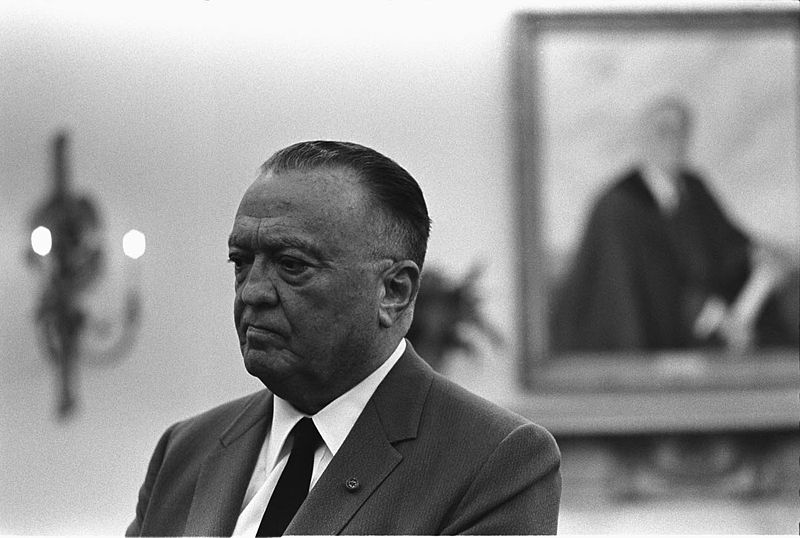
Of course, J. Edgar Hoover managed to stay in charge of the FBI for all of his adult life despite serving Presidents all over the political spectrum who hated him. And despite concerted efforts to depose him, or retire him, he always managed to hang on. It was almost like he had some magic that he could use against his enemies.

Since 9/11 a lot of blood and treasure has gone into creating a comprehensive surveillance regime of digital communications passing through the US. It seems that our wise and benevolent leaders have access to AT THE VERY LEAST all the cell phone bills in this country. 

Despite all of this a couple foreigners managed to plot and perpetrate a bombing attack on the Boston Marathon. So, why did we spend all that money?

If it doesn't catch terrorists, what does it catch?

Put on your tin foil hat before I ask the next question: 

Have you ever noticed how politicians change after they go to Washington? I'm sure there are lots of reasons: getting the money from lobbyists for reelection campaigns comes to mind. Or playing to a National stage.

But if I were a politician with any damaging secrets that could be penetrated by traffic analysis, I'd assume they're known to persons within the NSA. 

And we can trust them like we trust the IRS with our financial data.

Thursday, June 6, 2013

We're All Nihilists Now

In the '60s, a politician, or an economist opined, "We're all Keynesians now," to announce the death of common sense in the domain of economics. (And a fun game of a few years later was to troll people with claims that "Obama is a Keynesian" in hopes that someone would confuse Keynesian and Kenyan.)

After watching the 4th season of Arrested Development, I'm willing to hazard that we're all Nihilists now.

In the first three seasons of the show, you got the impression that there were these two relatively nice people I could identify with who had been embedded in a nest of vipers. Fun vipers, but vipers none the less. Michael was the protagonist and I always longed for him to bid adieu to the rest of the family and take George Michael with him. They were characters I could identify with because their moral compasses were not as thoroughly demagnetized as the rest. Sure, the other characters were a lot of fun, but they were evil.

Not the evil of Hannibal Lector, but the evil of Jeeter Lester that is feckless, ineffectual and funny.

The first impression I got from the 4th season was that Michael and George Michael wanted to get in on the fun. And this was reflected in the exorcism of the last shreds of integrity from their characters.

Even the cat-like Maeby who had been amoral and cunning (a perfect fit for Hollywood, right?) was transformed into just another wastrel. Her relative success was a breath of fresh air to the story.

The result is a show I enjoyed, but not one that I felt I could identify with.

I believe the problem was that it is truly nihilist now. The show depicts Gob as a "Christian magician" as a dual of his more successful rival a "Gay magician." Almost as if both homosexuality and Christianity are mere affinity groups with no more significance than being marketing niches. There was a time when a person's appetites gave him significance and meaning. And before that a person's religion. This is un-watered nihilism.

And not the assertive nihilism of the Germans in the Big Lebowski, but a much more flaccid sneer at everything.

Don't get the idea I think Arrested Development wasn't funny. Or that I didn't like it. I have not laughed harder than I did at a couple points in the series. And I've troubled you with not one but two blog posts about it.

I'm just a little troubled.

When my kids were little, we got a copy of Bill Bennet's "Book of Virtues." Which was an anthology of little moralistic essays and stories ranked from easy to hard. The hardest of the essays was written by C. S. Lewis and it was entitled, "Men Without Chests." In it, Lewis suggests that a society needs men who can stand when others run, men who take up the hemlock like Socrates and drink it to make a point bigger than themselves, men who engage something transcendent.

Lewis reminds us of the notion of "proper affections" which is a simple matter of loving that which is good, and hating that which is evil. But what is the good that I may love it? Is it an arbitrary preference to be decided by tribal leaders or dictated to the sheeple by someone with the will to power?

I'm not offering any answers to these questions, but I will observe that if your answers to them are lame, then your ability to devise believable villains will be equally lame. As will your ability to stand against tyranny.

Wednesday, June 5, 2013

Rashomon Overdose

Akira Kurosawa and Ron Howard both make movies. They both know more about film making in their little finger than I ever will--which is an accomplishment because most people don't store knowledge in pinkies.

In 1950 Akira Kurosawa made a movie called Rashomon about a crime and the court testimony about that crime. The crime is horrific--a rape and murder--and it is recounted from four perspectives. This was groundbreaking in 1950, because the story differs significantly depending upon who's telling it. It marks the beginning of the popularization of this key insight of Postmodernism: "truth" is always mediated through the subject who perceives it, interprets it, and recounts it.

In the wake of Rashomon we've seen a change in the parameters of storytelling. It's now cool and commonplace to show the same events multiple times through different eyes. And that's the big deal with the new season of Arrested Development. Each episode follows one character or another and tells a story showing the same events with the camera focused on that character. In early episodes, there are clues that something funny or even mystical is going on. In later episodes, the reader can infer what was going on by examining the same event from another character's point of view.

This is catnip for fan boys who can stop. rewind a bit, then examine each frame at a time. After I watched the last episode I felt like going back and watching the earlier episodes again knowing what I now know to pick up the things I missed the first time around.

It's like watching A Beautiful Mind, finding out that the girl is a fig-newton of Nash's imagination, then going back to confirm that she does not disturb the birds in the yard where she's running around them.

Aside: One of the ways to tell whether a photo has been faked is to look for people's reactions to the odd thing that's been added. When a honking huge flight of Soviet jets go roaring over Red Square, someone in the crowd is going to look up. Keep that in mind when you see something remarkable on the Internet.

The fact that the entire season of Arrested Development consists of a few events that are told and retold leads me to think that Arrested Development is suffering from a Rashomon overdose. I think it works because the series has a cult-like following, and here is something that the cultists can chew on.

I also think that it does not work so well for non-cultists. You have to care about the characters before you want to see the same events rerun several times from their several perspectives. The focus on the minutiae of each character's foibles detracts from the larger scope of the story. Does it do it too much? Yes and no. I call this note "Rashomon Overdose" because I think there's a more than optimal amount of retelling from diverse perspectives. It makes some people queasy and others nauseous while others who have built up a tolerance just want more.

There is something else going on here: narrowcasting.

If you can identify a cult and write a story that its cultists will love, you can make serious money serving this niche market. Amanda Palmer broke records for Kickstarter fundraising by reaching just 35,000 enthusiasts.

Felicia Day puts the emphasis on being able to reach your audience and stories with cult-following should be easier to reach.

The Netflix-Arrested Development hook-up can be wildly successful while drawing numbers that would mean instant-cancellation on a broadcasting network like Fox. 

The key is to keep your overhead low enough that you don't spend more money than your cult can pony up.

Tuesday, June 4, 2013

There Oughta Be A Law

I know the USA is doomed when I hear both parties calling for laws to address lawless behavior when there are already laws on the books that they choose not to enforce.

Let's unpack what I just said. A criminal breaks a law and this criminal act is used to inflame the passions of the electorate. These inflamed passions are cited by legislators to justify more laws. Particularly galling are the promises that this time it will be different.

If you're a Democrat, this means you want more gun laws. And if you're a Republican, this means you want tough immigration reform.

The perfect crime should be perpetrated by an illegal alien using an assault weapon. If he's a Caucasian the Democrats can search for a white male, and if he's a Muslim the GOP can search for an Islamofascist. Everyone wins. The government has a subsidy for Chechens to this very end.

And if you're Whig, you get the impression that you're being played by both sides.

Then there's the fact that when these laws actually get drafted they contain "poison pill" language intended to make it radioactive to the other side. The point isn't to get the law passed, it's to make the law fail and in failing inflame the passions of those disappointed true believers the politicians intend to shake down for more donations.

With this in mind, keep an eye on your postbox. Soon you'll get a flier with a picture of a werewolf on it named Hillary Bush or Richard Milhouse Obama. The text inside will tell you that this demon is about to corrupt your precious bodily fluids. And you must send them money to keep your family safe from this boogieman.


Those more worthy than I: