Wednesday, January 23, 2013

The Hollywood Stupid Tax

In the year 1966 a television show premiered that I absolutely loved. It was called Star Trek and it followed the adventures of humanity going off into unexplored regions. Though the starship Enterprise was the focus of action, they'd show up from time to time at a mining camp or a human colony. And you'd see hearty pioneer stock, like the people I imagined my ancestors were.

When Gene Roddenberry had to do some axe grinding it involved a Kirk and Uhuru interracial smooch. Or the fella with white on one half of his face and black on the other half of his face couldn't play nice with the other fella whose coloration was the opposite. Happily, the ratio of axe grinding to story telling was kept low enough that the show was watchable.

Fast forward three decades and someone in Hollywood gets the idea for a new Star Trek series called "Enterprise" wherein they follow the exploits of an earlier band of explorers. The show was unwatchable because it way too politically correct.

When Star Trek Next Generation came out, interracial smooching was passe and they went on to whatever social issues were current hot buttons. And the axe-grinding to story-telling ratio got cranked way up, too. For crying out loud, they replaced Kirk with a Frenchman! And what'd he do in the first episode, he surrendered.

Political correctness assimilated the Star Trek franchise far more thoroughly than any Borg collective possibly could. Thus, when Enterprise came out, and it depicted a future that was less technically advanced than any of the other Star Trek shows. Nevertheless, it proved to be the more politically correct than any of its predecessors. How could that be? Did Kirk vote for Reagan or something to make the original show less politically correct than Enterprise? It made no sense and I quit watching in disgust.

When I reflected on the death of the Star Trek franchise I came to the conclusion that it was bankrupted by what I call the Hollywood Stupid Tax. Let's suppose you work in the entertainment industry. You vote for Santa Claus in every election. You think gun violence is caused by scary-looking weapons. You think society needs to move "Forward" to embrace the economic theories of the 1930s that worked oh, so well for FDR, Stalin, et al.

News flash: there are bitter clingers who don't think like you do. There are people who recognize that when seconds count, the cops are just minutes away and seek to arm themselves. There are people who go to church and worship as they choose. And they watch television and movies. If you hew just a little more to the center, you can get some of their money.

You don't have to be a Whig like me to enjoy a good story, but you do have to be a Whig like me to enjoy my political blather about how great a candidate Daniel Webster was or how wonderful the planet would be if we gave the Ring of Power to the Whig Party. If you don't agree with my politics, you won't enjoy my axe-grinding nearly as much as my story-telling.

Thus Star Trek Enterprise killed the franchise because it tipped the balance too much toward political correctness and became unwatchable to anyone to the right of Walter Mondale. If lefty propaganda sold, we'd be awash in Russian Tractor Operas. (Boy meets girl. Collective Farm gets new tractor. Boy gets drunk on cheap Vodka. Girl learns she needs him as much as a fish needs a bicycle and lives happily-ever-after driving the tractor.)

Human nature is neither Red nor Blue. Stories that reflect human nature and engage our humanity at that level aren't Republican or Democrat, Socialist or Fascist, Monarchist or whatever. When you write anything that drifts one iota from that, you're paying some stupid-tax with everyone who disagrees with the party-line. In a thousand years, nobody will care about our partisan interests, but they will engage with our narratives at the level of the humanity we put into them.

Sunday, January 20, 2013

Pick One

I have a writing friend who is an academic. He is afflicted with the curse of knowledge. There's one aspect of this curse I'd like to draw to your attention.

He likes to use two words to amplify or elaborate his intent. Instead, he needs to pick or select one or the other. You will see or note, that he seeks or attempts, to strengthen or augment his prose when all he does is annoys or piques his reader.

One does not get paid more for maximizing the number of distinct words in a piece.

It's nice that you want to express a nuanced intent. It's also nice that you know enough words that two or more of them bracket that intent. And you want to use both. I'll give you a gold star if you don't do it.

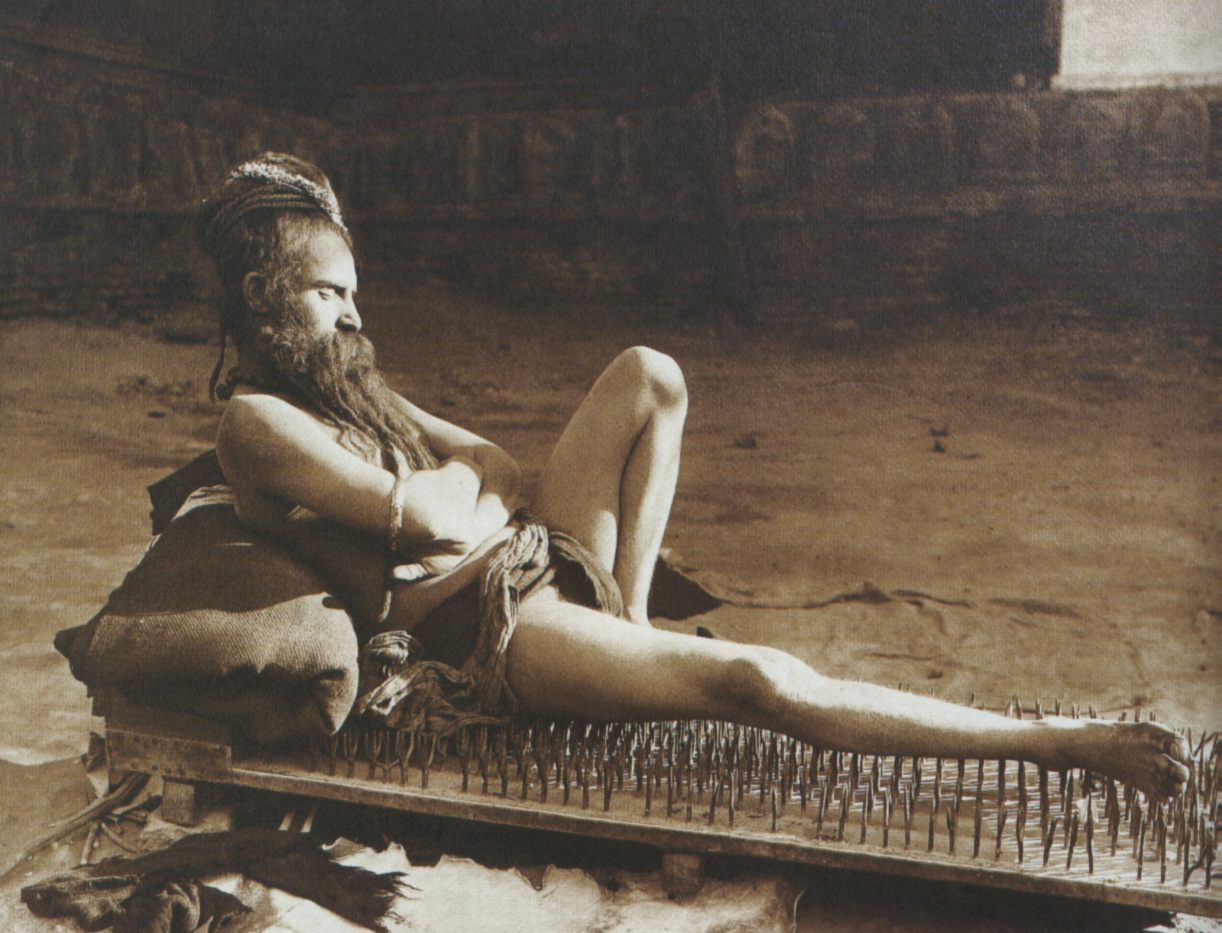
The fakir can lie on a bed of nails because there are hundreds of points upon which the load is distributed. Words are like nails. Use one and it penetrates. Use two and you divide their impact. Make a habit of it, and your prose will have the punch of a flaccid dodgeball.

Next time you are considering or weighing two words when neither exactly expresses your intent, sacrifice one. Or better yet, ask yourself if you know another word that works better than the first two you contemplated.

Friday, January 18, 2013

One Amazing Pigmy

The brain is a neural network. It works by establishing connections between cells with varying degrees of connectedness then sending electro-chemical pulses through it.

The brain is continually tweaking these connections and it uses sleep to make adjustments. During sleep, what you learned during waking hours is contextualized and adjusted to fit everything you already know. All this happens below the level of conscious thought.

When you cudgel your brain into solving a problem it is a conscious effort that puts all the facts into your mind.  In this you load up the brain with all the puzzle pieces that the subconscious uses to solve your problem. And the subconscious will continue working after you've nodded off to sleep.

When I write a story, I have to think of how I'm going to get from where I am to the next point. It can be as easy as putting Mycroft Holmes on horseback with a couple sepoys and sending him into the countryside of Kashmir. Or it can be as tough as figuring out how a bunch of boffins can miss the solution our young adult protagonist finds at the climax of your story.

One of my favorite grand masters of the golden age of Science Fiction was A. E. Van Vogt. He spoke of how he went about engaging his brain to write:
"I took the family alarm clock and went into the spare bedroom that night, and set it for an hour and a half. And thereafter, when I was working on a story, I would waken myself every hour and a half, through the night--force myself to wake up, think of the story, try to solve it, and even as I was thinking about it I would fall back asleep. And in the morning, there would be a solution, for that particular story problem. Now, that's penetrating the subconscious, in my opinion. It's penetrating it in a way that I don't think they'll be able to do any better, thirty centuries from now."
What Van Vogt did in his spare bedroom was to alternate between conscious and unconscious thought every 90 minutes or so directed toward the goal of solving the story problems of his work in progress. I think this approach will work with any kind of problem solving, but I particularly want to use it on one of my future writing projects.

A. E. Van Vogt was characterized by Damon Knight as a pigmy at a giant's keyboard. If this is so, then he was one amazing pigmy.

Thursday, January 17, 2013

Words That Count

I prefer to sit down at my keyboard and write without much regard to how many words it takes. I also prefer to be rich, and live in the south of France. In the old days, writers were paid by the word and using more words instead of fewer words had a positive impact on the writer's paycheck. Things don't work that way any more. Recently I entered a writing contest and it had a word limit of 8k words.

Trouble is that the idea for the story fits in a novel. A nice, long novel with corporate intrigue, geopolitical machinations, a space colony, and a boy & girl becoming lovers. Sure, I can get that story in if I've got 100k words, or more likely 300k words. The contest between the UN and the Spacers or the one between corporations, will take 8k words just to set up.

So, I had to trim things back. The first thing I did was to drop the scene in West Virginia. All it did was establish the protagonist's short temper. Also cut, the unannounced change in destination from the Moon to an asteroid. That's what you do when you have to cut back on word-count. Ask each scene what it does to bring to the overall story arc.

After I pared everything down to the core of my story I started writing in my normal fashion until I got to about the 6k mark. Going through the already-written prose to get more words would be a very bad idea. Instead, I had to change my approach, more telling, less showing. Less dialog. The story came together beneath the limit with about 150 words to spare.

I didn't like doing that, but it's a tradeoff. Any constrained optimization solution you have to offer gambits--losing something desirable to avoid something more undesirable. You never have to think to cut a bad thing to add a good thing. You always have to agonize over cutting a good thing to add what you hope to be a better thing.

This is why it's good to refine your ability to express the jist of an idea. In any project you're working on, you may be asked to describe it. Maybe you'll have two weeks to give a seminar. More likely a few minutes to give an elevator pitch. Sure, the summary isn't as good as the real thing, but you can make the summary as good as possible.

When you hit the word limit on a piece, you have to start sacrificing bits of the story. If you can't remove a piece without the story collapsing, you have to replace it with a summary. This is an ugly solution. If you do it badly, you'll have an Irving the Explainer character. Not good. The art is in figuring out what to sacrifice and how to sacrifice it. (Like in a screen adaptation.)

The genius is in finding a sacrifice that improves the piece. When Hemingway wrote icebergs he managed to evoke thousands of words of backstory through a few facts sewn into the narrative like pearls sewn into a silk gown.

I was kidding with a friend about a story in its early planning stages. My protagonist seemed a bit bland and I flippantly remarked, "Suppose she shot a man in Reno, just to watch him die." That got me thinking about backstory events that shaped this character's life and her reaction to a fellow who's similar to and yet different from the man she murdered. These considerations added about a dozen sentences total to the narrative. Yet they serve as an emotional axis about which the character turns.

I didn't have the word-count available to show Alaska, the rape, the murder, and stint in prison. I could only drop hints, because I wanted to use those words to show her solving problems in a space colony.

Did it work? Idunno. Check back with me later. The main thing is for you to find what works for you.

Monday, January 14, 2013

Dixie and the Guru

Rumor had it that he wore a sheet, sat in a lotus position, and rode around campus in an open palanquin.

The occasion was Cedar What, a mock election held every four years at my alma mater. This mocked the Nixon/McGovern election, but the late entry of a 3rd party candidate won instead.

If you check your history, you'll note that some famous White Guy was the 3rd party candidate in '72, but in Cedar What that year the winning dark horse candidate was a black student.

But I'm talking about half of the ticket known as Dixie and the Guru. "Dixie" was the English prof who was married to Paul Dixon, who went on to be President of Cedarville College. "The Guru" was a philosophy prof named James Murray Grier. Years later, we still called him The Guru.


He was my Guru. The man taught me to think.

I said Jim Grier taught philosophy. He was reputed to have an intimidating vocabulary and was one of the two toughest profs on campus. I took Intro to Philosophy from him and I proved the perfect foil. He would present some theory and an objection would form in my mind. I'd raise my hand, and voice the objection. He invariably slapped it down with the greatest of ease. Little did I know I was reinventing each of the classic objections and he needed only recite the classic counter-objections from memory. I entered this class thinking human will was the center of reality and left this class thinking that it is secondary to divine will.

I still got a B in the class. Cedarville didn't use pluses or minuses. That bothered me because any class I put my mind to I could get an A in. So, I took another and another Grier class. It took me until my senior year to learn how to get an A from him.

In his classes, I was the sole Math major and my questions always reflected the technological or scientific perspective of whatever he was discussing.

I suppose this must have had an impact, because years later he was preaching in my church and I raised my hand. He recognized me, and said, "You! No more questions!"

(Along these same lines, I found a tape of when he came to speak to my Calculus class. As I was listening--years later--a question formed in my mind. Seconds later I heard an annoying nasal voice on the tape--mine--ask the same question.)

It wasn't that Jim Grier devised some marvelous new way of thinking, but that he managed to integrate a diverse collection of considerations into a single, coherent whole. The best summary of his thought was, "He's got it all together."

I well recall sitting in Ethics class my senior year when things slipped into place.

Life may be different for you, but for me I figured out little models of how the world worked. Each was effective in its separate domains. Outside those domains singularities appeared that would invalidate the model. And a different model would have to be created and used. Wittgenstein spoke of different languages that people bring into play in different contexts, and that's similar to what I've got in mind.

When I was in Ethics class, he mentioned a certain school of Christian mysticism that I had been a fan of and properly contextualized it. It was just like putting a piece into a jigsaw puzzle--not the first ones around the edges, but that one where you've got most of the puzzle together and then suddenly the pieces start flying in as fast as you can pick them up.

I suppose you could call me a Protestant Scholastic. It's as accurate as Zen Baptist or Libertarian Puritan. At Cedarville I could say I was a "Grierian" and everyone knew what I meant.

Rest in peace Jim Grier. You left big shoes to fill.


Saturday, January 12, 2013

Never Put Two Sherlocks In A Scene

I have a friend who is an expert in something I'm blissfully ignorant of. I'm really quite an ignoramus on this topic. And she wrote a story wherein the first scene, her dazzling knowledge is on full display. Two characters are both experts in this same field and they are discussing a specific exhibit at a specific gallery of a specific museum in New York City.

Though I am an ignoramus, I'm not stupid and I know it. But if I was stupid, or just a little less confident in my little gray cells, I would be turned off by that narrative.

She's resisting the urge to "dumb it down," and I can appreciate that. I write at a fairly high level when the narrative strays into my areas of expertise. Just keep me away from the unobserved quantum systems and everybody walks out of here alive.

I hope the reader comes to my prose with a desire to have some fun. I'm never going to be assigned reading in any school course and I don't write to save humanity from itself. Should everyone on the planet who ever picks up one of my stories come away knowing about quantum mechanics or Cartesian Rationalism? God forbid.

Gentle reader, I promise I won't intentionally make you feel stupid. Even when I know whodunnit and am playing strip-tease with the clues. No, it isn't Mrs. White in the Library with a Pipe. Nice guess though.

If you make too many specific New York Metropolitan Museum of Art references, your readers will feel stupid. If they feel stupid, they'll buy fewer books. This isn't a call to "dumb down" the narrative, but to make it more inclusive of smart, yet ignorant people. I hope you'll find my narratives inclusive of smart, but ignorant people.

Keep in mind that I am ignorant person. There are gaping gaps in my knowledge. Those gaps are there because of a misspent youth finding out about transcendental mathematics, infinite sets of Lebesgue-measure zero, and other mathy stuff. And I haven't even gotten to Turing machines. Or unobserved quantum systems.

Thus when you have a scene that's set in a gallery of a museum, I suggest you channel your sensations in that space instead of identifying it by name. Not everyone has been inside the Henry Ford Museum, but they know the feel of a velour cordon, the echo of a woman's heels on polished marble, the glint of light on a glass display case.

If my character stands beside a turquoise Duesenberg, that's not as compelling to the reader as being in the presence of chrome and paint that is polished to an almost painful degree of shininess that calls to mind the craftsmanship of a lost age and evokes a yearning automotive lust that is utterly unattainable unless you--gentle readers--start buying my writing faster than Clive Cussler's. Here's a link, hint hint.

I have a story wherein I did something stupid with two characters named Luke and Xavier. One's a Catholic Alien, and the other is a Baptist Human. They are both Christians and they're both conversant in the scriptures of the Christian faith. They're normally polar opposites in terms of culture and temperament and the conflicts between these two protagonists work delightfully.

What I did stupidly was dueling Bible References. One would give a snippet of a verse, and the other would provide chapter-and-verse. I thought it was cute. I'm an idiot. It's annoying and it kills the narrative flow of the scene. If you're not a Bible scholar, you might appreciate an aphorism drawn from the scriptures here and there, but you won't give a fig about looking it up for yourself. When these fellas are playing Bible Roulette it is like two Sherlocks in the same room talking to each other and leaving the rest of the class in their dust.

That's why Watson is priceless to Arthur Conan Doyle and us mere humans. Someone must be an everyman of normal intelligence to whom Holmes can explain his line of reasoning. By normal intelligence, I don't mean an IQ of 100. I mean an IQ of your target market.

Thus the natural conversation between Holmes and Watson serves the purpose of opening the mind of Holmes to the reader.

When the writer is an expert s/he should regard the role of writer as that of popularizer. If you're Carl Sagan, Sister Wendy Beckett, or James Burke you've got all this awesome expertise rattling around your noggin. And if you're any of these people, you've made a ton of bread making that expertise accessible to the general public.

I've talked about how the writer does not know everything he needs to know. And though the writer may fake it, s/he cannot be caught faking it. This is the opposite. It's a twist on the curse of knowledge.

The citation of specifics lends verisimilitude to the narrative. It tells the reader you've done your homework and gives you credibility. But there's a price you pay when readers don't follow you. Like everything, you need balance. If you are thinking of yourself as a popularizer, then you won't overload your readers.

If your interlocutors in scene are both experts, they will talk expert-to-expert. Their conversation will be full of jargon and your audience will be completely lost. I can't see how that can ever work for you when they're talking shop.

When I put Sherlock and Mycroft in scene together, I won't won't give you a disquisition on forensic science or the deductive arts. Instead you should expect to see brothers bickering like brothers do. A lot of people understand sibling rivalries, so that's what I give the reader.

Friday, January 11, 2013

Sickness and Evil

I recently saw a TED talk about psychopaths and I came to think that a lot of normal people are wrongly identified as psychopaths. At the end of the talk the speaker says he refused the offer of lunch with a fellow who'd been released from an insane asylum after many years of perhaps wrongful incarceration. He posed it in "what would do?" kind of way.

The presumption in my mind when I heard the talk being that we should not shun a person with a mental illness. It's not contagious. But then I got to thinking, there are other reasons to decline a lunch invitation with someone.

I would not decline lunch with Elmore Leonard because I think he is a wonderful writer. I believe he has a real understanding of criminal motivation and it comes out in his writing. I've complained elsewhere about the bogus motivations of some villains. But truer words have seldom been spoken than,"In Elmore’s world, death stalks the land disguised as money.” I love the lines of dialog Mr. Leonard puts into his characters' mouths.

Elmore Leonard writes about criminals who have a crystal clear motivation: money. Criminals motivated by getting money are fun characters to read and write about because most of them are stupid enough to get caught, but they think they're smarter than they really are.

"No, dear, you just THINK you're Professor Moriarty."

I don't think we can ever write about a villain motivated by insanity. Let's suppose the fella thinks he's an emperor simply because some moistened bint lobbed a simitar at him. No crime in that. But let's suppose he proceeds to behead his girlfriend for treason when she deprecates watery tarts as a basis of government. His crime is motivated by preserving power, not by insanity. Insanity is a means, not a motive. Likewise, when a woman drowns a kitten because she thinks it's a demon, her motivation isn't insanity, it is purifying the world. This is a twist on the mistaken-identity, misunderstanding conflict between characters.

After money, Revenge is an effective motivator for both villains and heroes alike. When the Hebrew prophet said "an eye for an eye" he limited the damages that can be lawfully sought by an aggrieved parties to just an eye. He did this because it is common to amplify slights into major insults.

Revenge motivates the villain most villainously when it is disproportionate.

Suppose you lost you job as a school treasurer--an elected position. And suppose further that your home was in default and about to be foreclosed upon by the bank. And you hope to revenge yourself against the voters who insulted you by voting for the other guy and the bankers who want to take your house away. What to do? It's altogether reasonable for someone angered in this way to seek revenge and do so in the largest way possible.

This could be done, if you're evil enough, through a number of purchases of explosives over the course of months and the placement thereof in your home and the local public school--the site of your humiliation.

Nothing particularly crazy about seeking revenge is there?

In Bath, MI on May 16th of 1927, an evil man did did exactly that killing several dozens of innocent children and adults. The mind recoils at such evil. Rejecting it, we think he had to be sick. No, he was evil.

In the decades that have followed, other feckless losers have perpetrated similar crimes and the phrase, "If it bleeds, it leads," is part of the news cycle. So much so, that the Revenge motive is supplemented by the Notoriety motive.

This brings us to the legal, but evil acts of news outlets who profit from the pain of disasters like this. You can sell a lot of newspapers displaying the image of the feckless loser and endlessly asking "why?" Give us dirty laundry.

This is legal, but it is evil. Legal-but-evil acts are the Original Sin of the businessman. For this reason Hollywood can easily and believably paint the manufacturer, the employer, the producer as the villain.

Criminals motivated by getting money are stupid enough to get caught. The ones that are smart enough to NOT get caught find evil-but-legal means to enrich themselves by impoverishing the rest of us. They aren't criminals because they never get caught. We are all a little less safe whenever the media makes the feckless loser mass-murderer into a pop-star.

So let's return to the fellow who was incarcerated for several years as a supposed psychopath. When you consider the sane acts of this person, you realize the man is amoral. He regards other people as mere furnishings of his life. Maybe he's sane or maybe he's crazy, that's questionable. But there is no doubt the fellow is a little more evil--he has less regard for his fellow-man--than most others.

Thus, I would have no qualms about declining a lunch invitation, not because he's sick, but because he's evil.


Those more worthy than I: