The BBC series Sherlock airs on American PBS stations.
It just finished its second season here in the States and I thought it fitting to share my opinions. The show was created by Steven Moffat and Mark Gatiss. Those names seemed familiar and I did some googling. Yup, those guys were big in the reboot of Dr. Who a few years back.
This is good news because the Dr. Who reboot has been wildly successful. It's also bad news because the biggest mistake made in the reboot was carried forward into Sherlock.
Any story whose protagonist is somehow special must soon acquire an arch-nemesis who is equal in every way to the hero, but evil.
In Dr. Who the arch-nemesis is another Time Lord named the Master. In the original Dr. Who series the Master was a fellow who looked sort of like a Spanish count. In Law & Order Criminal Intent the arch-nemesis was Nicole Wallace. She was delightfully evil and quite easy on the eyes. However, when they rebooted Dr. Who the Master was cast as a sort of nasty schoolboy. Cruel for no apparent reason, he acted immaturely and i found it impossible to take him seriously.
Speed forward to BBC/PBS Sherlock.
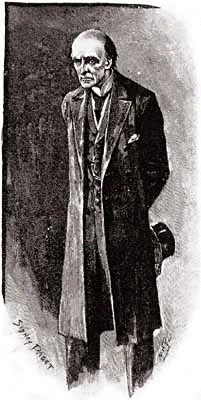
Writing when he did Arthur Conan Doyle did not know that he had to give Sherlock Holmes an arch-nemesis. When he wanted to kill off Holmes and go on to something else, he created Professor James Moriarty. In so doing Doyle created the pattern of the arch-nemesis.
People smarter than I have described the necessary prerequisites of an arch-nemesis. One necessary prerequisite of an arch-nemesis is that the reader (or viewer) take him seriously. I could not take seriously either the clown who played the Master or the other clown who played Professor Moriarty.
Evil, like truth, is complicated. You can't just take all the virtues and swap them out in equal measure with vices. Or you'll get some useless old sot shambling through scenes. For my money, the best villain I've seen in a while is The Operative. He's so evil, you don't even learn his name. In his case he believes in the Alliance and he believes the ends justify the means. HIS means generally consist of killing people with his katana.
He kills for his faith.
What made the Operative so effective was that he held all the virtues intact, but he was pursuing an agenda given to him by the Alliance. Years back I saw "The Day The Universe Changed." In the opening scene James Burke shows a witch burning and describes what could they be thinking to do such a thing. Clearly, the end of saving the girl's soul from eternal hellfire justified end means of burning her alive. Such thinking also motivates savages who fly airplanes into buildings.
But villainy is not one-size-fits all. One does not become a Nazi all in one go. Instead, small steps, baby steps are made one at a time weaving a cord of character that ends in evil and arch-evil. C.S. Lewis shows this in Perelandra and again in That Hideous Strength as reasonable, civilized individuals are transformed into demonic villains one seduced step after another.
I think that the reason why Dr. Who muffed the Master and Sherlock muffed Professor Moriarty stems from the fact that the grammar of virtue and vice, of good and evil, has been lost to this generation of Englishmen.
This has comments on my writing and reading. Primarily about Mycroft Holmes and stories involving him. Secondarily about whatever I'm reading at the moment.
Saturday, May 26, 2012
Sherlock Who
Labels:
antagonist design,
BBC,
Dr Who,
Evil,
sherlock holmes,
villainy,
virtue
Friday, May 18, 2012
Lean Startup And Writing
There's a concept going around called "Lean Startup." Maybe you've got this idea for a better mousetrap: You invent the thing. You tool up a factory and produce a bunch. You open a storefront to sell them. And what's missing? Customers. You will have to make people aware of your solution. Not just any people, but those who can afford your mousetrap.
Lean Startup turns this line of thinking inside out. Start with the people you can most easily reach, offer them goods on a web page, and THEN invent, tool, and produce. The premise is that we make guesses about what folks want and we offer the goods as an experiment to confirm that guess.
If nobody responds, we're only out the cost of producing the "landing" web page. However, if tons of people hit that web page to get the goods, we know we've got customers. And if you've their email addresses, you can get back with them. It's revolutionary.
What has it to do with writing?
When some ink-stained wretch starts scribbling, s/he has to decide what to write. The answer may be "what I want" or "what my publisher wants," but a better answer is "what your readers want." How will I know that? Guess?
Suppose you take your N coolest story ideas. Compose the blurb you'd use to sell each story. Then drop that blurb into a web page. Put it up and try to drive traffic to it. If nobody ever visits, stop. You can't reach that story's audience even if the story is awesome and the audience is massive.
Conversely, if you get a few hundred visits, you know you can attract eyeballs to your story--a necessary first step. And if you get them to click on your response key, you know you have some real demand for that story.
I don't know about you, but I get 100x more story ideas than I have time to write up. I could use such a scheme to prioritize pending writing projects. This is reader pull, not writer (or publisher) push.
It's not that much different from setting up a Kickstarter project to score a fat advance for your non-fiction book on meat, or something--but I digress. I think this is how to proactively engage fears of the conveyor-belt and furnace. Instead of listening to some soon-to-be-downsized editor tell you what you should be writing, you'll hear readers expressing their preferences.
Sounds great, right?
I forget who wrote this: I suspect it was Jerry Pournelle who wrote that an an author is like a storefront. After I found out that I liked Exiles to Glory, I backtracked to find High Justice, Birth of Fire, West of Honor, The Mercenary, then I haunted booksellers for each subsequent book with his name on it. (I'd say the same about Clive Cussler and Tom Clancy, except it's complicated and distracting. I'll explore that distraction another day.)
That's how I read when I discover someone whose prose I adore. I drink up everything they've written and watch for new releases. The writer must protect his or her reputation and respect his reading public.
I ran this idea past someone who knows a lot more about writing than I do. She didn't like it because it is a bad idea to tease readers with something they want, but can't have. It creates resentment. She said it's like waving a candy bar in front of a two-year-old and going, "You can't have it."
This is a pitfall of what I'll call "Lean Writing" (until someone comes up with a better name). If you put up a landing page promising Ailurophages From Space" then you'll need to manage expectations of those who tell you they want to read about aliens eating kittens.
"No, it hasn't been written yet." "Yes, I'm waiting for N emails from folks promising to buy it." "Or yes, I'm X% complete with the I'th draft (where N, X, and I are numbers that'll vary)."
In the software world we have a term "vaporware" that we apply to cool software that someone promised, but never delivers.
Do you remember when I wrote about Heinlein's Five Commandments? Commandment #2 says, "You must finish what you write." Suppose you break it:
So, what do you think? Will "Lean Writing" work? Why or why not?
Lean Startup turns this line of thinking inside out. Start with the people you can most easily reach, offer them goods on a web page, and THEN invent, tool, and produce. The premise is that we make guesses about what folks want and we offer the goods as an experiment to confirm that guess.
If nobody responds, we're only out the cost of producing the "landing" web page. However, if tons of people hit that web page to get the goods, we know we've got customers. And if you've their email addresses, you can get back with them. It's revolutionary.
What has it to do with writing?
When some ink-stained wretch starts scribbling, s/he has to decide what to write. The answer may be "what I want" or "what my publisher wants," but a better answer is "what your readers want." How will I know that? Guess?
Suppose you take your N coolest story ideas. Compose the blurb you'd use to sell each story. Then drop that blurb into a web page. Put it up and try to drive traffic to it. If nobody ever visits, stop. You can't reach that story's audience even if the story is awesome and the audience is massive.
Conversely, if you get a few hundred visits, you know you can attract eyeballs to your story--a necessary first step. And if you get them to click on your response key, you know you have some real demand for that story.
I don't know about you, but I get 100x more story ideas than I have time to write up. I could use such a scheme to prioritize pending writing projects. This is reader pull, not writer (or publisher) push.
It's not that much different from setting up a Kickstarter project to score a fat advance for your non-fiction book on meat, or something--but I digress. I think this is how to proactively engage fears of the conveyor-belt and furnace. Instead of listening to some soon-to-be-downsized editor tell you what you should be writing, you'll hear readers expressing their preferences.
Sounds great, right?
I forget who wrote this: I suspect it was Jerry Pournelle who wrote that an an author is like a storefront. After I found out that I liked Exiles to Glory, I backtracked to find High Justice, Birth of Fire, West of Honor, The Mercenary, then I haunted booksellers for each subsequent book with his name on it. (I'd say the same about Clive Cussler and Tom Clancy, except it's complicated and distracting. I'll explore that distraction another day.)That's how I read when I discover someone whose prose I adore. I drink up everything they've written and watch for new releases. The writer must protect his or her reputation and respect his reading public.
I ran this idea past someone who knows a lot more about writing than I do. She didn't like it because it is a bad idea to tease readers with something they want, but can't have. It creates resentment. She said it's like waving a candy bar in front of a two-year-old and going, "You can't have it."
This is a pitfall of what I'll call "Lean Writing" (until someone comes up with a better name). If you put up a landing page promising Ailurophages From Space" then you'll need to manage expectations of those who tell you they want to read about aliens eating kittens."No, it hasn't been written yet." "Yes, I'm waiting for N emails from folks promising to buy it." "Or yes, I'm X% complete with the I'th draft (where N, X, and I are numbers that'll vary)."
In the software world we have a term "vaporware" that we apply to cool software that someone promised, but never delivers.
Do you remember when I wrote about Heinlein's Five Commandments? Commandment #2 says, "You must finish what you write." Suppose you break it:
- If nobody knows, then nobody gripes.
- If you're a traditional writer with a traditional agent and editor, they'll gripe.
- But if you put up a "Lean Writing" landing page, then everyone who clicks the "I want it" button will come after you with torches and pitchforks. And your writing brand will be likened unto the purveyors of "vaporware."
So, what do you think? Will "Lean Writing" work? Why or why not?
Labels:
Aliens,
Clive Cussler,
Jerry Pournelle,
Kittens,
Lean Startup,
Maureen Ogle,
Robert Heinlein,
Sarah Hoyt,
Tom Clancy,
writing
Friday, May 11, 2012
In Love With Linda Chorney
Yesterday I attended the TEDx Grand Rapids event. If you've ever seen a TED talk, you know they present stimulating ideas and I derive the most value from a talk when agree-or-disagree I get some new idea from it.
The talk I loved the most was given by a delightful woman named Linda Chorney. Her incandescent personality filled the auditorium and I was smitten. She is a musician who does not have a Record Deal.
She says, "she's so indie, she's an outie."
Just as there are zillions of writers toiling in obscurity, there are zillions of musicians nobody's ever heard of. But just because you've never heard of Linda Chorney does not means she's not insanely great.
There's an entire ecosystem of lampreys, remoras, and pilot fish swimming alongside the sharks of the Record Companies whose job is to make you hear of the artists they promote. They serve as gatekeepers keeping the riff-raff out. You want to stay on their good side, because they'll make or break your career. (Does this sound familiar to any of you writers out there?)
She described how she used just a little bit of social media savvy to wage a successful Internet campaign to win a Grammy Nomination for her last album. (She played for the TEDx crowd and she sounded great.)
The main reason why I love Linda Chorney is that she demonstrated that someone that nobody's ever heard of can upset the apple cart. She managed to disintermediate all those middle-men by going directly to the members of the Academy and requesting their consideration.
But because she did so without the lampreys, remoras or pilot fish, they were not amused when she was nominated. In the words of Governor William J. Le Petomaine, "We have to protect our phoney baloney jobs here, gentlemen!"
Then they launched a campaign of hate. (I think that the bipartisan effort to utterly destroy Sarah Palin was similarly motivated by her ability to disintermediate the legacy media and GOP apparatchiks, but I digress.) Ms. Chorney showed the TEDx audience some of the nasty things written about her.
She showed us the T-shirt she made and sells quoting the hate and turning it against itself.
I was primed for Linday Chorney's talk by a recent blog post by Sarah Hoyt describing the publishing industry going about its own process of destroying writers' careers to vindicate the opinions of traditional publishing's lampreys, remoras, and pilot fish.
If you've followed the writing careers of John Locke or Amanda Hocking, you know they've had good success through non-traditional publishing and they've also endured a lot of hateful "hrumphing" from traditional lampreys, remoras and pilot fish.
The bottom line is that the world is changing. If you listen to a lot of people saying, "hrumph" it is the end of the world as we know it. But if you're willing to be so indie that you're outie, you'll feel fine.
The talk I loved the most was given by a delightful woman named Linda Chorney. Her incandescent personality filled the auditorium and I was smitten. She is a musician who does not have a Record Deal.
She says, "she's so indie, she's an outie."
Just as there are zillions of writers toiling in obscurity, there are zillions of musicians nobody's ever heard of. But just because you've never heard of Linda Chorney does not means she's not insanely great.
There's an entire ecosystem of lampreys, remoras, and pilot fish swimming alongside the sharks of the Record Companies whose job is to make you hear of the artists they promote. They serve as gatekeepers keeping the riff-raff out. You want to stay on their good side, because they'll make or break your career. (Does this sound familiar to any of you writers out there?)
She described how she used just a little bit of social media savvy to wage a successful Internet campaign to win a Grammy Nomination for her last album. (She played for the TEDx crowd and she sounded great.)
The main reason why I love Linda Chorney is that she demonstrated that someone that nobody's ever heard of can upset the apple cart. She managed to disintermediate all those middle-men by going directly to the members of the Academy and requesting their consideration.
But because she did so without the lampreys, remoras or pilot fish, they were not amused when she was nominated. In the words of Governor William J. Le Petomaine, "We have to protect our phoney baloney jobs here, gentlemen!"
Then they launched a campaign of hate. (I think that the bipartisan effort to utterly destroy Sarah Palin was similarly motivated by her ability to disintermediate the legacy media and GOP apparatchiks, but I digress.) Ms. Chorney showed the TEDx audience some of the nasty things written about her.
She showed us the T-shirt she made and sells quoting the hate and turning it against itself.
I was primed for Linday Chorney's talk by a recent blog post by Sarah Hoyt describing the publishing industry going about its own process of destroying writers' careers to vindicate the opinions of traditional publishing's lampreys, remoras, and pilot fish.
If you've followed the writing careers of John Locke or Amanda Hocking, you know they've had good success through non-traditional publishing and they've also endured a lot of hateful "hrumphing" from traditional lampreys, remoras and pilot fish.
The bottom line is that the world is changing. If you listen to a lot of people saying, "hrumph" it is the end of the world as we know it. But if you're willing to be so indie that you're outie, you'll feel fine.
Labels:
Amanda Hocking,
indie,
John Locke,
Linda Chorney,
music,
outie,
publishing,
recording industry,
Sarah Hoyt,
TED,
TEDxGR,
writing
Saturday, May 5, 2012
Heinlein's Five Commandments
They say that hacks copy, but geniuses steal.
So, here's some things about writing to keep in mind. Make a point to steal these ideas and make them part of yourself as a writer.
copied stole this from. He envisioned these ideas reflecting a winnowing process that separates the masses from published novelists.
The process can be defeated if you have the will to keep on going and not stopping despite being sorely tempted to stop before you finish step number five.
It is easy to go for decades thinking, "I'd like to write a novel someday." I know, I have. It's something else to force yourself to actually do it. That's where NaNoWriMo shines. It forces a dilettante like myself to put his butt in a chair and start composing deathless prose. If you talk to many people who say they have a novel in them, only a few will actually sit down to write it.
It's also easy to start work on a project and get distracted. I've got a directory full of projects I've started but not finished. If you talk to many people who say they've started the Great American Novel, only a few will actually stick with the project to The End. For me, there's always something shiny to distract me, or a cool idea I'd like to explore. Wrong. It's a sad thing to hear one of my writer friends describe a project s/he's excited about, but years later it's been abandoned. It's sad to say you'll probably never get to meet Arthur Keyes or his protege Damien Washington. Other projects must be completed first.
When Heinlein was writing, the world was different. Jerry Pournelle hadn't invented the word processor yet and writing meant quality time with a typewriter, foolscap, and carbon paper. Yes, carbon paper. I can't imagine the tedium. NO, actually I can. When I was in college and grad school I got exactly ONE C. That was in Historiography. Everything I handed in to Dr. McGoldrick was graded an A. Except my course paper at the end of the term. He handed it back saying, "It has more than two typos. Retype it." And he gave me an incomplete. In the crush of the end of the term, I lost the paper and my incomplete became a C. No, I'm not bitter.
Heinlein's typewriter use probably skewed his thinking to make #3 a firm commandment. Rewriting at that time involved a lot of low-power brainwork. Nevertheless, it is worthwhile to try to get your prose as close to perfect on the first pass. There's nothing so tempting as the urge to just rewrite a sentence here or rephrase something there. No, wait, I can improve that last sentence again. And you come back later and change it back. This is an infinite-capacity time sink. Though I'm not good enough to get things perfect on the first draft, I think I should aspire to make the first draft as clean as possible.
You'll never read my first novel. It's safely kept in a desk drawer. It's got some interesting, likeable characters and some neat ideas. Trouble is that I know my prose-quality today is a lot better than it was then. I understand story-telling much better and I know that putting it on the market would be a Bad Idea because it would give you gentle readers a false impression of the quality of prose you can expect from me.
But I hope you've seen The Aristotelian. It is a darned good story and I am not ashamed of that prose.
It's easy to finish writing a story and then never take it out of the desk drawer. It is easy because you use one set of skills to write a story, and a completely different set of skills to send it around to literary agents and/or editors. Heinlein could put his manuscript and a self-addressed stamped envelope in the mail with a cover letter then wait for a reply weeks later. Nowadays, you have to understand how to attach a file to an email message. Simple stuff, but lots of people never take that step.
Finally, let me tell you about the day after Thanksgiving many years ago: I went to my mailbox and I found 14 self-addressed stamped envelopes: replies from literary agents who said in different words: "Sorry, not for us." A week before I had sent query letters to a couple dozen literary agents offering the deathless prose of my first novel.
A finished novel must be sold and sales is a numbers game. Heinlein knew this and his prose was good enough that if he kept sending it around, there would be someone out there who'd buy it. The thing is to keep on trying. I quit after a couple dozen queries. With a better novel, I'd have sent more dozens. Or I'd have reworked the novel to make it better then sent more queries.
So, here's some things about writing to keep in mind. Make a point to steal these ideas and make them part of yourself as a writer.
- You must write.
- You must finish what you write.
- You must refrain from rewriting, except to editorial order.
- You must put the work on the market.
- You must keep the work on the market until it is sold.
The process can be defeated if you have the will to keep on going and not stopping despite being sorely tempted to stop before you finish step number five.
It is easy to go for decades thinking, "I'd like to write a novel someday." I know, I have. It's something else to force yourself to actually do it. That's where NaNoWriMo shines. It forces a dilettante like myself to put his butt in a chair and start composing deathless prose. If you talk to many people who say they have a novel in them, only a few will actually sit down to write it.
It's also easy to start work on a project and get distracted. I've got a directory full of projects I've started but not finished. If you talk to many people who say they've started the Great American Novel, only a few will actually stick with the project to The End. For me, there's always something shiny to distract me, or a cool idea I'd like to explore. Wrong. It's a sad thing to hear one of my writer friends describe a project s/he's excited about, but years later it's been abandoned. It's sad to say you'll probably never get to meet Arthur Keyes or his protege Damien Washington. Other projects must be completed first.
When Heinlein was writing, the world was different. Jerry Pournelle hadn't invented the word processor yet and writing meant quality time with a typewriter, foolscap, and carbon paper. Yes, carbon paper. I can't imagine the tedium. NO, actually I can. When I was in college and grad school I got exactly ONE C. That was in Historiography. Everything I handed in to Dr. McGoldrick was graded an A. Except my course paper at the end of the term. He handed it back saying, "It has more than two typos. Retype it." And he gave me an incomplete. In the crush of the end of the term, I lost the paper and my incomplete became a C. No, I'm not bitter.
Heinlein's typewriter use probably skewed his thinking to make #3 a firm commandment. Rewriting at that time involved a lot of low-power brainwork. Nevertheless, it is worthwhile to try to get your prose as close to perfect on the first pass. There's nothing so tempting as the urge to just rewrite a sentence here or rephrase something there. No, wait, I can improve that last sentence again. And you come back later and change it back. This is an infinite-capacity time sink. Though I'm not good enough to get things perfect on the first draft, I think I should aspire to make the first draft as clean as possible.
You'll never read my first novel. It's safely kept in a desk drawer. It's got some interesting, likeable characters and some neat ideas. Trouble is that I know my prose-quality today is a lot better than it was then. I understand story-telling much better and I know that putting it on the market would be a Bad Idea because it would give you gentle readers a false impression of the quality of prose you can expect from me.
But I hope you've seen The Aristotelian. It is a darned good story and I am not ashamed of that prose.
It's easy to finish writing a story and then never take it out of the desk drawer. It is easy because you use one set of skills to write a story, and a completely different set of skills to send it around to literary agents and/or editors. Heinlein could put his manuscript and a self-addressed stamped envelope in the mail with a cover letter then wait for a reply weeks later. Nowadays, you have to understand how to attach a file to an email message. Simple stuff, but lots of people never take that step.
Finally, let me tell you about the day after Thanksgiving many years ago: I went to my mailbox and I found 14 self-addressed stamped envelopes: replies from literary agents who said in different words: "Sorry, not for us." A week before I had sent query letters to a couple dozen literary agents offering the deathless prose of my first novel.
A finished novel must be sold and sales is a numbers game. Heinlein knew this and his prose was good enough that if he kept sending it around, there would be someone out there who'd buy it. The thing is to keep on trying. I quit after a couple dozen queries. With a better novel, I'd have sent more dozens. Or I'd have reworked the novel to make it better then sent more queries.
Saturday, April 28, 2012
Screen Adaptations
I was surprised to discover that they're making another Percy Jackson movie. I saw the Lightning Thief and thought it was an abject failure. I had high hopes and they were dashed.
Some of the best movies start out as short stories. Hollywood likes to keep movies down to about 90 minutes in length. (Bollywood is another matter.) Thus a novel has more content than will fit into the available space. The screenwriter must adapt the novel to the screen by removing content.
The gold standard of screen adaptations is John Huston's work on The Maltese Falcon. If you read the novel by Dashiell Hammet, you might notice that the fat-man, Gutman, has a daughter. She doesn't contribute much to the story and thus the scene where Sam Spade talks to the daughter can be safely cut from the screenplay.
Screen adaptations are a game of Jenga where you pull out pieces of the story. Some, like Gutman's daughter, can be removed with anyone noticing. Others leave gaping holes. Or removing some story elements can cause the narrative structure to sag or to collapse altogether.
The art is in picking what to cut.
Some story elements can't be removed, but can be combined. Let's suppose Percy Jackson has two female classmates, suppose further they are both daughters of Greek gods of war: Ares, and Athena. Perhaps they can be combined. That would be a good idea if the girls both had the same sort of relationship with Percy, but in the novel one is an antagonist and the other an ally. The movie combined the two and the result is a high-maintenance girlfriend. Sorry, didn't work for me.
Other story elements can't be changed or the character of the movie changes drastically from the book. In the Lightning Thief novel, the school for god-kids is a big old mansion surrounded by Elysian fields and hills. It has some cottages but I got a definite Woodstock Yasgur's Farm/Strawberry Fields forever vibe from the prose. The movie moved the camp to woods that was recycled from some slasher pic. The atmospherics changed completely and not for the better. Every screen adaptation will have to deal with fan boys like me who are married to a mental picture they've formed of what Middle Earth or Hogwarts looks like.
But sometimes the film can convey a mental that was only indistinctly conveyed by the prose. Peter Jackson got the Balrog much better than Ralph Bakshi. And there's an art to getting the image that best fits the prose.
Underneath all this is the fact that stories are told through distinct media: prose, ballad, radio drama, or film. Each medium brings with it constraints and advantages.
The writer knows the story, but must also be aware of the medium able to work through it. The magic is made by telling the story in a way that leverages the advantages.
Some of the best movies start out as short stories. Hollywood likes to keep movies down to about 90 minutes in length. (Bollywood is another matter.) Thus a novel has more content than will fit into the available space. The screenwriter must adapt the novel to the screen by removing content.
The gold standard of screen adaptations is John Huston's work on The Maltese Falcon. If you read the novel by Dashiell Hammet, you might notice that the fat-man, Gutman, has a daughter. She doesn't contribute much to the story and thus the scene where Sam Spade talks to the daughter can be safely cut from the screenplay.
Screen adaptations are a game of Jenga where you pull out pieces of the story. Some, like Gutman's daughter, can be removed with anyone noticing. Others leave gaping holes. Or removing some story elements can cause the narrative structure to sag or to collapse altogether.
The art is in picking what to cut.
Some story elements can't be removed, but can be combined. Let's suppose Percy Jackson has two female classmates, suppose further they are both daughters of Greek gods of war: Ares, and Athena. Perhaps they can be combined. That would be a good idea if the girls both had the same sort of relationship with Percy, but in the novel one is an antagonist and the other an ally. The movie combined the two and the result is a high-maintenance girlfriend. Sorry, didn't work for me.
Other story elements can't be changed or the character of the movie changes drastically from the book. In the Lightning Thief novel, the school for god-kids is a big old mansion surrounded by Elysian fields and hills. It has some cottages but I got a definite Woodstock Yasgur's Farm/Strawberry Fields forever vibe from the prose. The movie moved the camp to woods that was recycled from some slasher pic. The atmospherics changed completely and not for the better. Every screen adaptation will have to deal with fan boys like me who are married to a mental picture they've formed of what Middle Earth or Hogwarts looks like.
But sometimes the film can convey a mental that was only indistinctly conveyed by the prose. Peter Jackson got the Balrog much better than Ralph Bakshi. And there's an art to getting the image that best fits the prose.
Underneath all this is the fact that stories are told through distinct media: prose, ballad, radio drama, or film. Each medium brings with it constraints and advantages.
The writer knows the story, but must also be aware of the medium able to work through it. The magic is made by telling the story in a way that leverages the advantages.
Friday, April 20, 2012
Third Act Fail
A while back I watched an old movie. It starred young versions of Dick Van Dyke and Barbara Feldon. I was amazed that I'd never heard of it before, because it started out hilarious, had great actors, and an amusing story line: Dick Van Dyke is a butler and a con-man who defrauds the rich to maintain the illusion that Miss Vicki the woman for whom he's butlering for still has money. He runs a gang of thieves who are all servants in Miss Vicki's household.
The inciting incident occurs when Miss Vicki hires Barbara Feldon as her assistant. Several madcap escapades ensue as Van Dyke tries to keep the truth from Feldon. On top of all that add a large dollop of romantic tension between the two. The conflict ramps up marvelously.
All the while I'm watching it, I kept thinking, "why haven't I ever heard of this movie before?"
Then I saw the third act. Van Dyke fesses up to Feldon and they profess their undying love. OK, then what? Sadly, a tedious final caper. It's tedious because all the air has been let out of the tires. All that delightful tension between Van Dyke and Feldon is replaced with tiresome happiness. Fail. Instead, when Feldon finally figures out what Van Dyke is really up to, an equivalent conflict/tension should have taken its place.
More recently, I watched another movie about a Coca Cola exec adjusting to Australian cultural differences and his attractive secretary. In this story, the conflict comes to a head with just a few strings left dangling--what happened to the girl's dad? This kept my watching closely through the final scene where words appeared to this effect "Then a week later a nuclear war started." What? Where'd that come from? Is this some kind of 1980s Australian political stupid tax? There was nothing to foreshadow that and it had no basis in anything in the movie. Left a bad taste in my mouth. It was like the writer ended the movie and then flipped the bird at the audience.
The last chapters of Neal Stephenson's Cryptonomicon are a disaster because he wraps up too many loose ends too quickly. At each point in the narrative you should ask yourself, "what loose ends are dangling and should I answer these story questions, because bigger story questions are now before the reader?" You should never get to the end of writing The Big Sleep and not know whether the chauffeur was murdered or had killed himself.
A third act fail happens when you start a story with a good premise with a great deal of promise. But all that potential is squandered when the 3rd act rolls around. A story has a natural arc and the characters should be going through changes that are fitting to that arc. Story questions should be raised and resolved with bigger story questions raised in turn. Every unresolved story question needs to be wrapped up. And they can't be wrapped up in a rush.
They say that you should always use the last chapter of your book to sell your next one. That's gospel truth. When I finish a book I feel a certain natural let-down. It's worse when the book ends badly. A 3rd act fail will vaccinate me against ever reading another book by that author. Instead, if the book ended well and left me wanting for more, I'll scour the libraries and booksellers for anything else written by the same author.
Each writer has to worry about maintaining his or her personal brand. I cannot imagine anything s/he might do to damage it worse than a 3rd act fail.
The inciting incident occurs when Miss Vicki hires Barbara Feldon as her assistant. Several madcap escapades ensue as Van Dyke tries to keep the truth from Feldon. On top of all that add a large dollop of romantic tension between the two. The conflict ramps up marvelously.
All the while I'm watching it, I kept thinking, "why haven't I ever heard of this movie before?"
Then I saw the third act. Van Dyke fesses up to Feldon and they profess their undying love. OK, then what? Sadly, a tedious final caper. It's tedious because all the air has been let out of the tires. All that delightful tension between Van Dyke and Feldon is replaced with tiresome happiness. Fail. Instead, when Feldon finally figures out what Van Dyke is really up to, an equivalent conflict/tension should have taken its place.
More recently, I watched another movie about a Coca Cola exec adjusting to Australian cultural differences and his attractive secretary. In this story, the conflict comes to a head with just a few strings left dangling--what happened to the girl's dad? This kept my watching closely through the final scene where words appeared to this effect "Then a week later a nuclear war started." What? Where'd that come from? Is this some kind of 1980s Australian political stupid tax? There was nothing to foreshadow that and it had no basis in anything in the movie. Left a bad taste in my mouth. It was like the writer ended the movie and then flipped the bird at the audience.
A third act fail happens when you start a story with a good premise with a great deal of promise. But all that potential is squandered when the 3rd act rolls around. A story has a natural arc and the characters should be going through changes that are fitting to that arc. Story questions should be raised and resolved with bigger story questions raised in turn. Every unresolved story question needs to be wrapped up. And they can't be wrapped up in a rush.
They say that you should always use the last chapter of your book to sell your next one. That's gospel truth. When I finish a book I feel a certain natural let-down. It's worse when the book ends badly. A 3rd act fail will vaccinate me against ever reading another book by that author. Instead, if the book ended well and left me wanting for more, I'll scour the libraries and booksellers for anything else written by the same author.
Each writer has to worry about maintaining his or her personal brand. I cannot imagine anything s/he might do to damage it worse than a 3rd act fail.
Saturday, April 7, 2012
Telling Truths Through Lies
Fiction writers occasionally say that they tell lies. We often see the disclaimer that "any resemblance to persons living or dead is purely coincidental." Despite this, the best fiction will depict truths about the human condition that bad fiction omits.
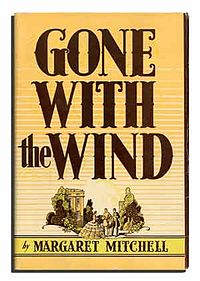
Some stories contain the same truths even if the facts are rearranged. Rhett Butler's disgust with Scarlet at the end of "Gone With The Wind" is the same even if her name were Ruby instead. Kenny Rogers' ballad would be as sad if Lucille were to take her love to town instead of Ruby. Or if Scarlet would pick a fine time to leave.
On one hand, consider the Parables of Jesus. He told stories about lost coins and yeast that are posed in such a way that they they don't need to be accurate recitations of events to be--by definition--gospel truth. You needn't take Jesus as your savior to derive useful meaning from the parables.
On the other hand, consider the situation in WW2 when a Nazi soldier came into a house and demanded, "Are there Jews here?" The woman living there replied, "Sure. They're hiding under the kitchen table. Can't you see them?" She uttered the literal truth, because beneath the kitchen table was a trap door that the Nazis couldn't see leading to a hiding place. Nevertheless, her literally-true reply was as misleading an outright falsehood.
This suggests a spectrum of truthiness in stories. Brute facts can be presented accurately with no truth in them. Or fantastic story elements can come together to convey higher truth.
Incidentally, the latter is my preferred mode of lying. I lament the fact that the harlot Rahab in the Bible didn't devise some clever evasion when asked if she was hiding the spies in Jericho. I like few things more than reading a Shakespearean utterance that "No man born of woman shall harm MacBeth" only to find out a little bit later that "MacDuff was from his mother's womb. Untimely ripped." Using a caesarian-section the Bard wrote a loophole.
It can be a taxing mental exercise to craft such things into one's writing, but I think it's worth the effort and I'll be delighted to see what people come up with.
We see a much more pernicious way of misleading in advertising--particularly political advertising--where half-truths are uttered without the larger context that would falsify them. Or where inconvenient facts are omitted. I've spoken of this before. But I never got around to mentioning How to Lie with Statistics.
Some years back a US President left some DNA on a girl's dress. That's a brute fact that most will stipulate as being accurate. What followed after that was called a "spin cycle" and it's more interesting, because it started a battle to assert "what does this mean." One narrative was that the DNA-on-dress clearly evidenced perjury, bad faith, and untrustworthy character on the part of the DNA-depositor. This narrative fit the facts, but a competing narrative held sway: The DNA-depositor was just acting naturally, and his accusers were dirty-minded hypocrites.
There's some truthiness in both narratives. Spin consists framing a narrative that imposes a desired significance onto brute facts.
Words written in a story have their own denotation and semantics, but what a work means transcends that. When you read something or write something, you should have a sense of "what does this mean." The writer may have one thing in mind, but the reader may have a different thing in mind. For instance, I watched a play a couple years back where the villain was a Christian with a Southern Accent. Oh, how original! Instead of passively going along with the playwright's bigotry, I decided to imagine the villain was a Bolshie community organizer with a Massachusetts accent. I recommend the practice.
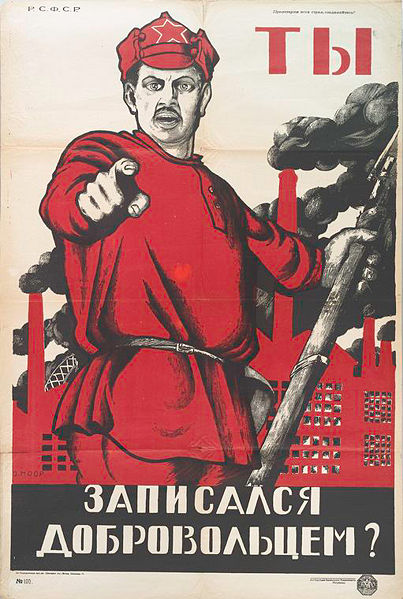
The writer ought not be so heavy handed. The viewer will identify good guys and bad guys, and then map them to categories s/he finds comfortable. Maybe you LIKE Bolshies, and HATE Baptists. Fine. The smart writer will put neither a red star on the hero's hat nor a Bible in his hand. Or maybe both.
Heroic valor and greedy fecklessness are as easily found in Bolshies as in Baptists. Or Scarlet, or Ruby or Lucille.
Some stories contain the same truths even if the facts are rearranged. Rhett Butler's disgust with Scarlet at the end of "Gone With The Wind" is the same even if her name were Ruby instead. Kenny Rogers' ballad would be as sad if Lucille were to take her love to town instead of Ruby. Or if Scarlet would pick a fine time to leave.
On one hand, consider the Parables of Jesus. He told stories about lost coins and yeast that are posed in such a way that they they don't need to be accurate recitations of events to be--by definition--gospel truth. You needn't take Jesus as your savior to derive useful meaning from the parables.
On the other hand, consider the situation in WW2 when a Nazi soldier came into a house and demanded, "Are there Jews here?" The woman living there replied, "Sure. They're hiding under the kitchen table. Can't you see them?" She uttered the literal truth, because beneath the kitchen table was a trap door that the Nazis couldn't see leading to a hiding place. Nevertheless, her literally-true reply was as misleading an outright falsehood.
This suggests a spectrum of truthiness in stories. Brute facts can be presented accurately with no truth in them. Or fantastic story elements can come together to convey higher truth.
Incidentally, the latter is my preferred mode of lying. I lament the fact that the harlot Rahab in the Bible didn't devise some clever evasion when asked if she was hiding the spies in Jericho. I like few things more than reading a Shakespearean utterance that "No man born of woman shall harm MacBeth" only to find out a little bit later that "MacDuff was from his mother's womb. Untimely ripped." Using a caesarian-section the Bard wrote a loophole.
It can be a taxing mental exercise to craft such things into one's writing, but I think it's worth the effort and I'll be delighted to see what people come up with.
We see a much more pernicious way of misleading in advertising--particularly political advertising--where half-truths are uttered without the larger context that would falsify them. Or where inconvenient facts are omitted. I've spoken of this before. But I never got around to mentioning How to Lie with Statistics.
Some years back a US President left some DNA on a girl's dress. That's a brute fact that most will stipulate as being accurate. What followed after that was called a "spin cycle" and it's more interesting, because it started a battle to assert "what does this mean." One narrative was that the DNA-on-dress clearly evidenced perjury, bad faith, and untrustworthy character on the part of the DNA-depositor. This narrative fit the facts, but a competing narrative held sway: The DNA-depositor was just acting naturally, and his accusers were dirty-minded hypocrites.
There's some truthiness in both narratives. Spin consists framing a narrative that imposes a desired significance onto brute facts.
Words written in a story have their own denotation and semantics, but what a work means transcends that. When you read something or write something, you should have a sense of "what does this mean." The writer may have one thing in mind, but the reader may have a different thing in mind. For instance, I watched a play a couple years back where the villain was a Christian with a Southern Accent. Oh, how original! Instead of passively going along with the playwright's bigotry, I decided to imagine the villain was a Bolshie community organizer with a Massachusetts accent. I recommend the practice.
The writer ought not be so heavy handed. The viewer will identify good guys and bad guys, and then map them to categories s/he finds comfortable. Maybe you LIKE Bolshies, and HATE Baptists. Fine. The smart writer will put neither a red star on the hero's hat nor a Bible in his hand. Or maybe both.
Heroic valor and greedy fecklessness are as easily found in Bolshies as in Baptists. Or Scarlet, or Ruby or Lucille.
Subscribe to:
Posts (Atom)