Saturday, May 5, 2012

Heinlein's Five Commandments

They say that hacks copy, but geniuses steal.

So, here's some things about writing to keep in mind. Make a point to steal these ideas and make them part of yourself as a writer.
  1. You must write.
  2. You must finish what you write.
  3. You must refrain from rewriting, except to editorial order.
  4. You must put the work on the market.
  5. You must keep the work on the market until it is sold.
This is Robert Heinlein's advice. You should Google him and find the cheesy scan of the article that I copied stole this from. He envisioned these ideas reflecting a winnowing process that separates the masses from published novelists.

The process can be defeated if you have the will to keep on going and not stopping despite being sorely tempted to stop before you finish step number five.

It is easy to go for decades thinking, "I'd like to write a novel someday." I know, I have. It's something else to force yourself to actually do it. That's where NaNoWriMo shines. It forces a dilettante like myself to put his butt in a chair and start composing deathless prose. If you talk to many people who say they have a novel in them, only a few will actually sit down to write it.

It's also easy to start work on a project and get distracted. I've got a directory full of projects I've started but not finished. If you talk to many people who say they've started the Great American Novel, only a few will actually stick with the project to The End. For me, there's always something shiny to distract me, or a cool idea I'd like to explore. Wrong. It's a sad thing to hear one of my writer friends describe a project s/he's excited about, but years later it's been abandoned. It's sad to say you'll probably never get to meet Arthur Keyes or his protege Damien Washington. Other projects must be completed first.

When Heinlein was writing, the world was different. Jerry Pournelle hadn't invented the word processor yet and writing meant quality time with a typewriter, foolscap, and carbon paper. Yes, carbon paper. I can't imagine the tedium. NO, actually I can. When I was in college and grad school I got exactly ONE C. That was in Historiography. Everything I handed in to Dr. McGoldrick was graded an A. Except my course paper at the end of the term. He handed it back saying, "It has more than two typos. Retype it." And he gave me an incomplete. In the crush of the end of the term, I lost the paper and my incomplete became a C. No, I'm not bitter.

Heinlein's typewriter use probably skewed his thinking to make #3 a firm commandment. Rewriting at that time involved a lot of low-power brainwork. Nevertheless, it is worthwhile to try to get your prose as close to perfect on the first pass. There's nothing so tempting as the urge to just rewrite a sentence here or rephrase something there. No, wait, I can improve that last sentence again. And you come back later and change it back. This is an infinite-capacity time sink. Though I'm not good enough to get things perfect on the first draft, I think I should aspire to make the first draft as clean as possible.

You'll never read my first novel. It's safely kept in a desk drawer. It's got some interesting, likeable characters and some neat ideas. Trouble is that I know my prose-quality today is a lot better than it was then. I understand story-telling much better and I know that putting it on the market would be a Bad Idea because it would give you gentle readers a false impression of the quality of prose you can expect from me.

But I hope you've seen The Aristotelian. It is a darned good story and I am not ashamed of that prose.

It's easy to finish writing a story and then never take it out of the desk drawer. It is easy because you use one set of skills to write a story, and a completely different set of skills to send it around to literary agents and/or editors. Heinlein could put his manuscript and a self-addressed stamped envelope in the mail with a cover letter then wait for a reply weeks later. Nowadays, you have to understand how to attach a file to an email message. Simple stuff, but lots of people never take that step.

Finally, let me tell you about the day after Thanksgiving many years ago: I went to my mailbox and I found 14 self-addressed stamped envelopes: replies from literary agents who said in different words: "Sorry, not for us." A week before I had sent query letters to a couple dozen literary agents offering the deathless prose of my first novel.

A finished novel must be sold and sales is a numbers game. Heinlein knew this and his prose was good enough that if he kept sending it around, there would be someone out there who'd buy it. The thing is to keep on trying. I quit after a couple dozen queries. With a better novel, I'd have sent more dozens. Or I'd have reworked the novel to make it better then sent more queries.

Saturday, April 28, 2012

Screen Adaptations

I was surprised to discover that they're making another Percy Jackson movie. I saw the Lightning Thief and thought it was an abject failure. I had high hopes and they were dashed.

Some of the best movies start out as short stories. Hollywood likes to keep movies down to about 90 minutes in length. (Bollywood is another matter.) Thus a novel has more content than will fit into the available space. The screenwriter must adapt the novel to the screen by removing content.

The gold standard of screen adaptations is John Huston's work on The Maltese Falcon. If you read the novel by Dashiell Hammet, you might notice that the fat-man, Gutman, has a daughter. She doesn't contribute much to the story and thus the scene where Sam Spade talks to the daughter can be safely cut from the screenplay.

Screen adaptations are a game of Jenga where you pull out pieces of the story. Some, like Gutman's daughter, can be removed with anyone noticing. Others leave gaping holes. Or removing some story elements can cause the narrative structure to sag or to collapse altogether.

The art is in picking what to cut.

Some story elements can't be removed, but can be combined. Let's suppose Percy Jackson has two female classmates, suppose further they are both daughters of Greek gods of war: Ares, and Athena. Perhaps they can be combined. That would be a good idea if the girls both had the same sort of relationship with Percy, but in the novel one is an antagonist and the other an ally. The movie combined the two and the result is a high-maintenance girlfriend. Sorry, didn't work for me.

Other story elements can't be changed or the character of the movie changes drastically from the book. In the Lightning Thief novel, the school for god-kids is a big old mansion surrounded by Elysian fields and hills. It has some cottages but I got a definite Woodstock Yasgur's Farm/Strawberry Fields forever vibe from the prose. The movie moved the camp to woods that was recycled from some slasher pic. The atmospherics changed completely and not for the better. Every screen adaptation will have to deal with fan boys like me who are married to a mental picture they've formed of what Middle Earth or Hogwarts looks like.

But sometimes the film can convey a mental that was only indistinctly conveyed by the prose. Peter Jackson got the Balrog much better than Ralph Bakshi. And there's an art to getting the image that best fits the prose.

Underneath all this is the fact that stories are told through distinct media: prose, ballad, radio drama, or film. Each medium brings with it constraints and advantages.

The writer knows the story, but must also be aware of the medium able to work through it. The magic is made by telling the story in a way that leverages the advantages.

Friday, April 20, 2012

Third Act Fail

A while back I watched an old movie. It starred young versions of Dick Van Dyke and Barbara Feldon. I was amazed that I'd never heard of it before, because it started out hilarious, had great actors, and an amusing story line: Dick Van Dyke is a butler and a con-man who defrauds the rich to maintain the illusion that Miss Vicki the woman for whom he's butlering for still has money. He runs a gang of thieves who are all servants in Miss Vicki's household.

The inciting incident occurs when Miss Vicki hires Barbara Feldon as her assistant. Several madcap escapades ensue as Van Dyke tries to keep the truth from Feldon. On top of all that add a large dollop of romantic tension between the two. The conflict ramps up marvelously.

All the while I'm watching it, I kept thinking, "why haven't I ever heard of this movie before?"

Then I saw the third act. Van Dyke fesses up to Feldon and they profess their undying love. OK, then what? Sadly, a tedious final caper. It's tedious because all the air has been let out of the tires. All that delightful tension between Van Dyke and Feldon is replaced with tiresome happiness. Fail. Instead, when Feldon finally figures out what Van Dyke is really up to, an equivalent conflict/tension should have taken its place.

More recently, I watched another movie about a Coca Cola exec adjusting to Australian cultural differences and his attractive secretary. In this story, the conflict comes to a head with just a few strings left dangling--what happened to the girl's dad? This kept my watching closely through the final scene where words appeared to this effect "Then a week later a nuclear war started." What? Where'd that come from? Is this some kind of 1980s Australian political stupid tax? There was nothing to foreshadow that and it had no basis in anything in the movie. Left a bad taste in my mouth. It was like the writer ended the movie and then flipped the bird at the audience.


The last chapters of Neal Stephenson's Cryptonomicon are a disaster because he wraps up too many loose ends too quickly. At each point in the narrative you should ask yourself, "what loose ends are dangling and should I answer these story questions, because bigger story questions are now before the reader?" You should never get to the end of writing The Big Sleep and not know whether the chauffeur was murdered or had killed himself.

A third act fail happens when you start a story with a good premise with a great deal of promise. But all that potential is squandered when the 3rd act rolls around. A story has a natural arc and the characters should be going through changes that are fitting to that arc. Story questions should be raised and resolved with bigger story questions raised in turn. Every unresolved story question needs to be wrapped up. And they can't be wrapped up in a rush.


They say that you should always use the last chapter of your book to sell your next one. That's gospel truth. When I finish a book I feel a certain natural let-down. It's worse when the book ends badly. A 3rd act fail will vaccinate me against ever reading another book by that author. Instead, if the book ended well and left me wanting for more, I'll scour the libraries and booksellers for anything else written by the same author.

Each writer has to worry about maintaining his or her personal brand. I cannot imagine anything s/he might do to damage it worse than a 3rd act fail.

Saturday, April 7, 2012

Telling Truths Through Lies

Fiction writers occasionally say that they tell lies. We often see the disclaimer that "any resemblance to persons living or dead is purely coincidental." Despite this, the best fiction will depict truths about the human condition that bad fiction omits.

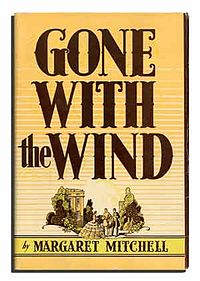
Some stories contain the same truths even if the facts are rearranged. Rhett Butler's disgust with Scarlet at the end of "Gone With The Wind" is the same even if her name were Ruby instead. Kenny Rogers' ballad would be as sad if Lucille were to take her love to town instead of Ruby. Or if Scarlet would pick a fine time to leave.

On one hand, consider the Parables of Jesus. He told stories about lost coins and yeast that are posed in such a way that they they don't need to be accurate recitations of events to be--by definition--gospel truth. You needn't take Jesus as your savior to derive useful meaning from the parables.

On the other hand, consider the situation in WW2 when a Nazi soldier came into a house and demanded, "Are there Jews here?" The woman living there replied, "Sure. They're hiding under the kitchen table. Can't you see them?" She uttered the literal truth, because beneath the kitchen table was a trap door that the Nazis couldn't see leading to a hiding place. Nevertheless, her literally-true reply was as misleading an outright falsehood.

This suggests a spectrum of truthiness in stories. Brute facts can be presented accurately with no truth in them. Or fantastic story elements can come together to convey higher truth.

Incidentally, the latter is my preferred mode of lying. I lament the fact that the harlot Rahab in the Bible didn't devise some clever evasion when asked if she was hiding the spies in Jericho. I like few things more than reading a Shakespearean utterance that "No man born of woman shall harm MacBeth" only to find out a little bit later that "MacDuff was from his mother's womb. Untimely ripped." Using a caesarian-section the Bard wrote a loophole.

It can be a taxing mental exercise to craft such things into one's writing, but I think it's worth the effort and I'll be delighted to see what people come up with.

We see a much more pernicious way of misleading in advertising--particularly political advertising--where half-truths are uttered without the larger context that would falsify them. Or where inconvenient facts are omitted. I've spoken of this before. But I never got around to mentioning How to Lie with Statistics.

Some years back a US President left some DNA on a girl's dress. That's a brute fact that most will stipulate as being accurate. What followed after that was called a "spin cycle" and it's more interesting, because it started a battle to assert "what does this mean." One narrative was that the DNA-on-dress clearly evidenced perjury, bad faith, and untrustworthy character on the part of the DNA-depositor. This narrative fit the facts, but a competing narrative held sway: The DNA-depositor was just acting naturally, and his accusers were dirty-minded hypocrites.

There's some truthiness in both narratives. Spin consists framing a narrative that imposes a desired significance onto brute facts.

Words written in a story have their own denotation and semantics, but what a work means transcends that. When you read something or write something, you should have a sense of "what does this mean." The writer may have one thing in mind, but the reader may have a different thing in mind. For instance, I watched a play a couple years back where the villain was a Christian with a Southern Accent. Oh, how original! Instead of passively going along with the playwright's bigotry, I decided to imagine the villain was a Bolshie community organizer with a Massachusetts accent. I recommend the practice.

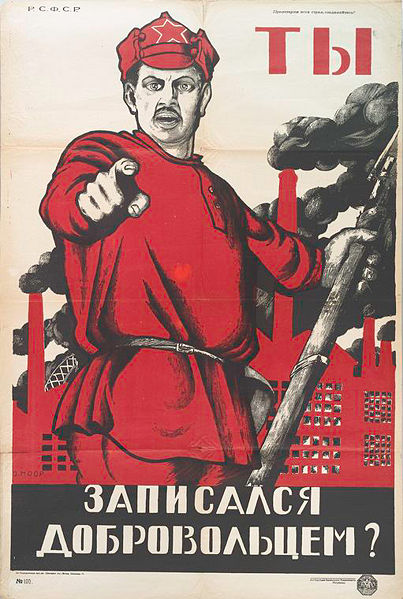
The writer ought not be so heavy handed. The viewer will identify good guys and bad guys, and then map them to  categories s/he finds comfortable. Maybe you LIKE Bolshies, and HATE Baptists. Fine. The smart writer will put neither a red star on the hero's hat nor a Bible in his hand. Or maybe both.

Heroic valor and greedy fecklessness are as easily found in Bolshies as in Baptists. Or Scarlet, or Ruby or Lucille.

Friday, March 30, 2012

Anti-Turing tests

One of the least-expected things the Internet has taught me is to ignore Spambots. It's pretty easy to spot the offering for male enhancements or the like. The filtering software is getting better at pulling weeds, but still some gets through. Sadly, Spam has spread to every form of online messaging such as Twitter.

While weeding spambots from my Twitter account I noticed something disturbing: The amount of humanity in a Twitter update could be very low. Some humans can act like spambots and often do so. I don't want to their posts cluttering my Twitter feed any more than I want to see offers for male enhancement.

What I've been thinking through is a sort of Anti-Turing test to judge how human my interlocutor is. If you weren't trained as a Computer Scientist, the British Cryptologic-Mathematician, Alan Turing, proposed a test for machine intelligence. Instead of figuring out how to program IQ tests and administer them to machines, he suggested putting a person in the room with a teletype and the other end of the teletype would either be another person or a computer. He suggested that when the computer could be programmed to be indistinguishable from the person, that would constitute a human level of machine intelligence.

(It's interesting that intelligence is an aspect of a Turing test, but I'll come back to that.)

Consider this conversation:
"Hello"
"Buy my book"
"How are you doing today?"
"Buy my book"
"Did you know a meteor is about to destroy the planet and we'll all die?"
"Buy my book"

There's zero humanity in the responses, but suppose you added some social fluff. The minimum necessary to not seem rude. There'd be some humanity there, but not much. So consider the following conversation:
"Hello"
"Hello. Nice to hear from you. Did you know I've got a book out?"
"How are you doing today?"
"I'm feeling a chill--I should get a sweater and curl up with a good book."
"Did you know a meteor is about to destroy the planet and we'll all die?"
"No. That sounds horrible. Do you want to buy my book so you won't think about the meteor?"

That sounded pretty much like a human, but a cheesy one.

I used an exhortation to buy my book as a dehumanizing element in these example, but it applies equally well to other exhortations: Trusting Jesus, Electing Whigs, Ending Childhood Hunger, or Ending Childhood Obesity. Humanity is can be seen in concern for a larger cause, but the cause often demands human sacrifice.

This is why when you advertise that you're an activist, there's a risk I'll mistake you for a spambot, or worse a zombie whose soul has been sucked away by The Cause.

This goes for name-calling. If you dislike some public figure, you don't need human-level intelligence to call him a poopy-head. That's why Rush Limbaugh apologized for calling an activist a slut. Maybe this woman's demand for birth-control did not indicate fornication or otherwise betoken sexual promiscuously, but he had no knowledge of her sex-life. His rhetoric was mere name-calling and I disapprove.

I think a much more damning indictment of the woman would be to call her an activist.

As mentioned above the Turing test was devised as an intelligence test. Humanity is a broader concept than mere intelligence. Jeremy Brett played Sherlock Holmes as an inhumanly brilliant intelligence. The way he and other players have depicted Holmes' extreme intelligence was to act rudely and insensitively. (Anyone in grade school should know that this isn't smart.) In movies, this rudeness is a mere device to convey to the audience that here's a smart guy. It is like talking very fast and using big words like the Architect in the second Matrix movie. (Did he say anything? No, but he sounded smart.)

In real life, this rudeness is often low social skills. I trained as a mathematician and I was in class with a lot of smart guys with low social skills. I make wider allowances in such cases.

This brings us to people with undeniable humanity who are nonetheless unpleasant? Intelligence makes a person see things more quickly and grow impatient with someone who more slowly comes to that point--or grow enraged by someone who seems obtuse about missing the point. Combine this with low social skills, and someone can come off as a jerk.

I don't want to be a jerk, but I don't want to listen to jerks. I don't watch House because I can't believe anyone would be stupid enough to voluntarily associate with him. When Jean-Paul Sartre said "Hell is other people" he must have been a jerk and was forced to work with jerks.

Humanity has other negative aspects in addition to being a jerk, the Internet has taught me the concept of a troll. The troll wants nothing more than to see people lose their cool. This is evil and I won't voluntarily associate with evil.

In sum, I have three principles of associating with Internet entities:
  • Manifest your humanity
  • Don't be unpleasant
  • Don't be evil.

Friday, March 23, 2012

Reading and Writing Manifestos

Some years ago I happened upon an essay in The Atlantic that became a standalone book, "A Reader's Manifesto." It lamented the sorry state of American contemporary literature: What respectable authors wrote as serious, respectable literature was just awful, pretentious, and affected as far as readers are concerned.

I'm sorry to say that though this essay resonated with me and most of my writer friends and all of my reader friends, the Brahmins who decide what shall be published and who give out MFA degrees did not take any deliveries from the clue bus.

Now we are hearing that the publishing industry is doomed, doomed I say because of ebooks. Or something.

Doom is what happens to any business when those who decide upon the products to be offered make their decisions based upon ideology, politics, and group-think instead of based upon market demand. The jargon term is Market Failure and it happens when customers cannot acquire the goods they desire from providers. When this happens, the consumer Goes Somewhere Else. (If the market failure is caused by a government regulating prices or censorship, Somewhere Else is called a black market.)

Disruptive technologies are God's gift to humanity, because their disruptions often undermine formerly unassailable monopolies, creating opportunities for small, agile mammals to raid the nests of big, stupid dinosaurs. In this context, the disruptive technologies of the ebooks plus Internet booksellers, enable the unsatisfied reader to go Somewhere Else.

When I was a child, there was exactly one dystopian novel of any note. (Atlas Shrugged didn't seem dystopian, because I knew John Galt was going to stop the engine of the world and remake it in Ayn Rand's image.) 1984 was a young adult novel only because every high school student was required by Mrs. Grundy to read it in English class.

Why waste time with Big Brother when there are novels with rocket ships and space suits written by fellas a boy could identify with--featuring protagonists who were escaping danger and helping friends out of danger--or better--hunting for and finding treasure. They weren't filled with angst about who would bite them on the neck and suck the life out of them.

Heinlein's protagonist in this novel worked in a pharmacy and lamented his oversight of failing to stock his space suit with amphetamines. Let's see someone try to get away with something like that in today's YA market. Granted, times change and the American culture changes what it finds acceptable.

Hard work, initiative, and resourcefulness characterized Kip Russell (pictured above), not drug use. Readers of 1958 understood that. They saw NASA putting up satellites and would soon see men in orbit and then go to the moon. The future was full of hope and opportunity that could be exploited for everyone's gain.

Editors of 2012 have tended to steer book deals to Yet Another Dystopian story. (Remember when Star Trek made the Enterprise drive 55?) Is the present bleak and the future hopeless? Are there limits to growth?

Maybe. But I won't spend money buying books about it. None of this is new. I've made some of these observations before.

I believe reading is not punishment. The reader is primary and delivering value to the reader is the writer's duty and the reader--not the writer or the editor--defines what constitutes that value. I hope that my writing as it provides that value can also illustrate some of the wonder and beauty of the universe and human nature, but that can't get in the way of the story.

What is new this week is news of a subversive group of revolutionaries (or reactionaries) who are standing athwart history crying stop. Sarah Hoyt has invited fire by articulating certain principles that she thinks characterizes Human Wave Science Fiction writing. And she's put together a manifesto for Human Wave Science Fiction. She names names of writers producing prose that fits this label and manifesto. And she names my favorite SF authors in the process.

I have always thought the future might hold great tribulation, but things will improve as we get smarter about how the universe works. This optimism is probably the most subversive thing that Mrs. Hoyt, et al. is manifestoing.

Manifestoing?

Friday, March 16, 2012

Confusing Heroes and Villains

I have a dirty little secret that I keep very poorly: I am an American. If you are a foreigner, you may use the word Yank--or Damn Yank before I get done with this note. Last night I was perusing Instant Netflix and I saw an episodic television show that looked interesting, Outcasts. I started watching. It seems the story concerns a colony on a planet in the near future. OK, I like the sound of that.

The first thing after the cool spaceship-establishing shot was the guy walking out of the wilderness into the community of Carpathia. Then the guy gets hassled because the town now is a gun-free zone. This show must be written by and for Brits--there's no Second Amendment. We quickly discover two things about the guy: He wants to move out of the Green Zone and into the wilderness he's charged with exploring on foot.

In the future, they've forgotten how to make ATVs.

Did you notice Green Zone? Yeah, that. This planet they're colonizing appears to be a verdant Afghanistan with allied troops holed up in quarters with air conditioning and television while occasionally sallying forth into the surrounding countryside, but not living there.

And not learning to live there. Too much like the British Raj and not enough like the Old West. I'm not just dumping on the Brits here. The US followed the same pattern in Vietnam. And that worked out so well, didn't it?

Contrast the settlement of the North American continent by Europeans. We moved here and we spread out.

The fellow in the establishing shot appears to hold American attitudes of Guns and Manifest Destiny. Thus, he's obviously insane. His psych profile says he suffers from multiple personality disorder? It's a TV show--that happens all the time on TV. And he's paranoid. He thinks people are out to get him.

Coincidentally, it happens that his wife is part of this little community's Stazi and she has been tasked with spying on him. Just because you're paranoid doesn't mean everyone's not out to get you.

The irony got me wondering where the script writers are going with this thing? a) They are stupid and didn't see the irony. b) They're smart and they're giving good motivation to those who desire to leave this Gulag. I fear the former--it's not as if Joss Whedon is writing this thing.

So, the Stazi chick and her co-worker are patrolling the settlement and they encounter a couple idlers engaging in a business transaction. As policemen are wont they commence to hassle said idlers--and bring accusations of Black Market dealing.

(Black Markets happen whenever a state over-regulates trade through price-fixing or the outright prohibition of goods or services. The State's central planners are so much better at regulating an economy than free markets. Ask any Soviet.)

Suddenly, a blinding dust storm envelopes the place and the idlers run off with Stazi chick in hot pursuit. Then Bam! Someone hits her. She is badly wounded. The idlers are accused of the assault. At this point, I figured the script writer would proceed to take 45 minutes to establish alibis for the idlers and to pin the assault onto her husband. I turned it off.

Does Carpathia deserve to survive?

I think it not. A state governs with the consent of the governed--not the script writer. A frontier town does not have the power to compel unwilling compliance from people who can walk away. Or when people have the guns to answer force with force.

England is a beautiful country with stone fences around everyone's garden and high hedges along the roadsides. The policeman is called a bobby and he doesn't carry a gun. They don't have to. The land has been tamed by two thousand years of civilization. A powerful government can rule with a heavy hand.

But an unsettled planet has no stone fences. A government that is not powerful must rule with a lighter hand or it risks its own stability. This fairly easy to understand notion has apparently escaped the writers of Outcasts.

It's not as if Joss Whedon is writing this thing.

Firefly told the tale of the losers of a war of rebellion against another heavy-handed government. But I identified with Captain Mal and his crew. Outcasts set up a similar conflict between heavy-handed government and rebels and they clumsily made me hate their heroes and love their villains. The same thing happened in the movie First Blood. Sylvester Stallone had the good sense to pivot from Rambo as crazed Vietnam vet to super-warrior.

I fancy a notion that the most restless and independent left Europe for the New World. As the US has become a tamed land, the most restless of America have fled to its wildest places. I believe that space colonies will be started by restless and independent people--not compliant sheep who tolerate tyrants--even petty ones. I would suspend disbelief no further.

Thus I abandoned Outcasts to watch Macbeth instead.
Do we but find the tyrant's power tonight,
Let us be beaten, if we cannot fight.


Those more worthy than I: